

Always have the materials you need to keep production flowing with real-time inventory insights from Sutton.











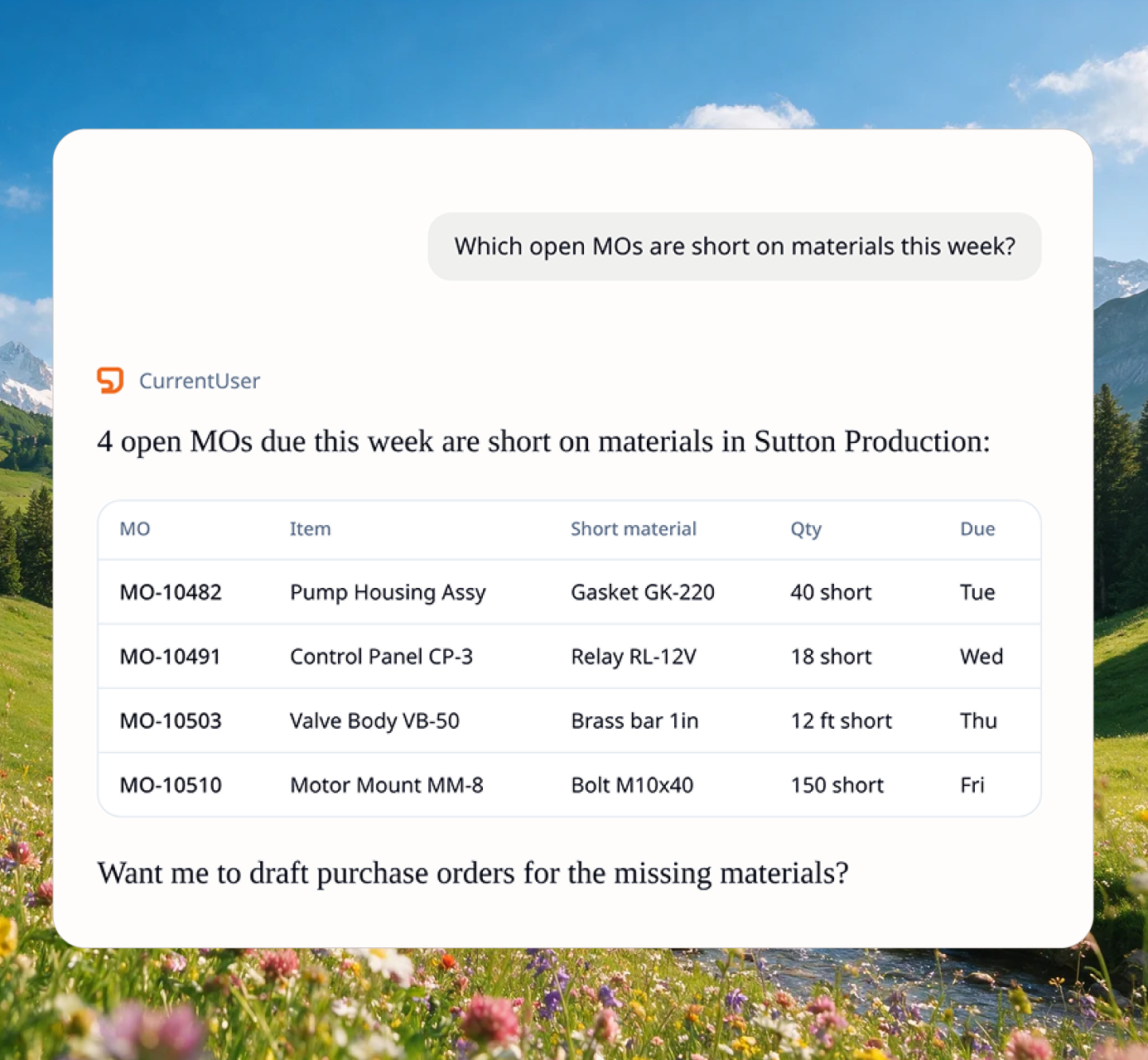







Sutton calculates material requirements for Manufacturing Orders with BOMs. Each BOM defines the exact raw materials and quantities needed to produce a finished product.
For complex products, Sutton can also auto-generate nested MOs from a top-level order, creating all required sub-assemblies automatically.
Here's how it works:

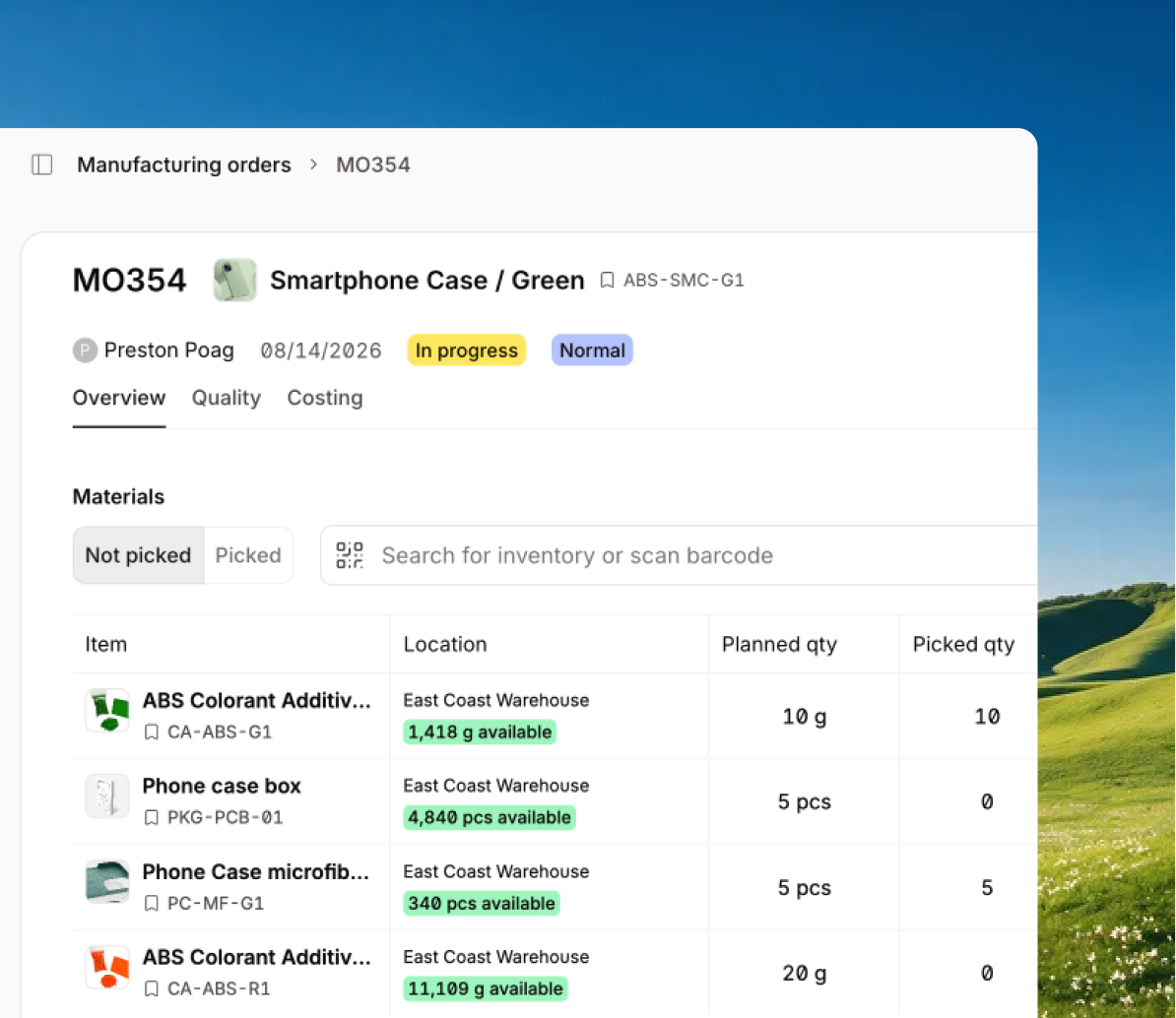
Get complete control over every order and material movement with live data that keeps operations coordinated and on schedule.
The Inventory page shows all items and current stock levels across locations, including Available, In Stock, Committed, Reserved, Acquired, and Quarantined quantities in real time.
Here's how it works:

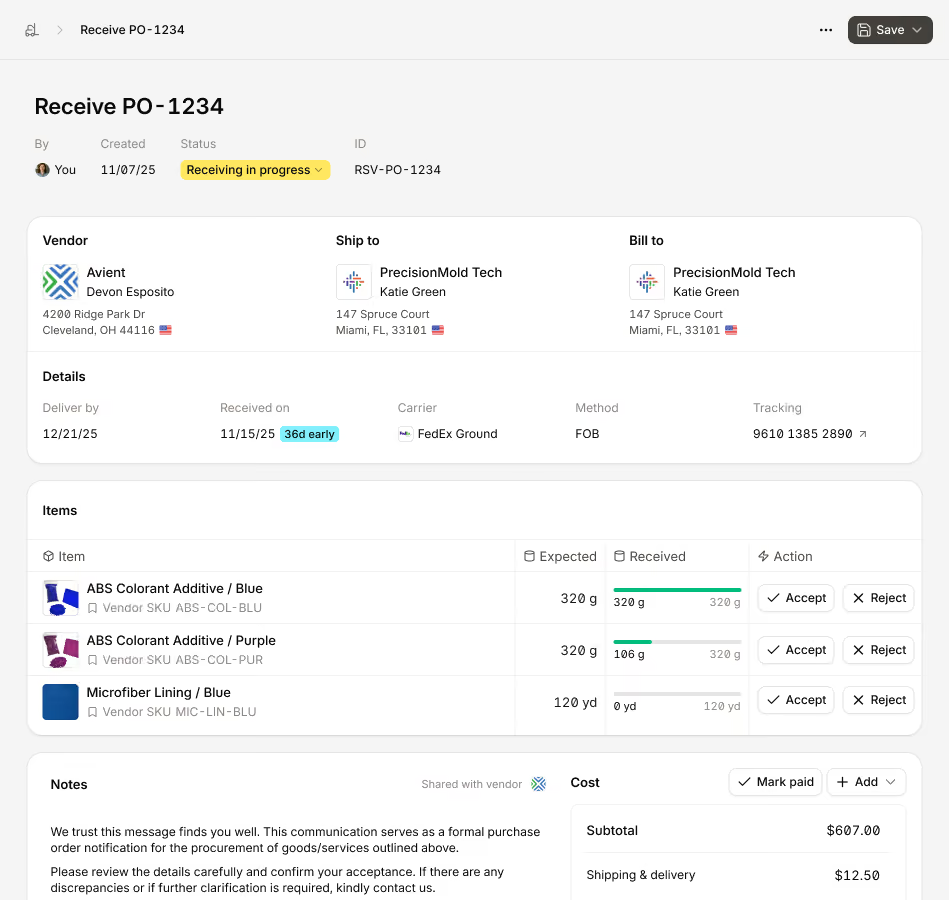
Track every part, pallet, and product with instant insight into quantity, value, and location. Sutton gives you real-time inventory visibility and control from receiving to shipment.
Raw materials are tracked from Purchase Orders through production, with every material picked, labor logged, and output created and recorded against the Manufacturing Order.
Here's how it works:
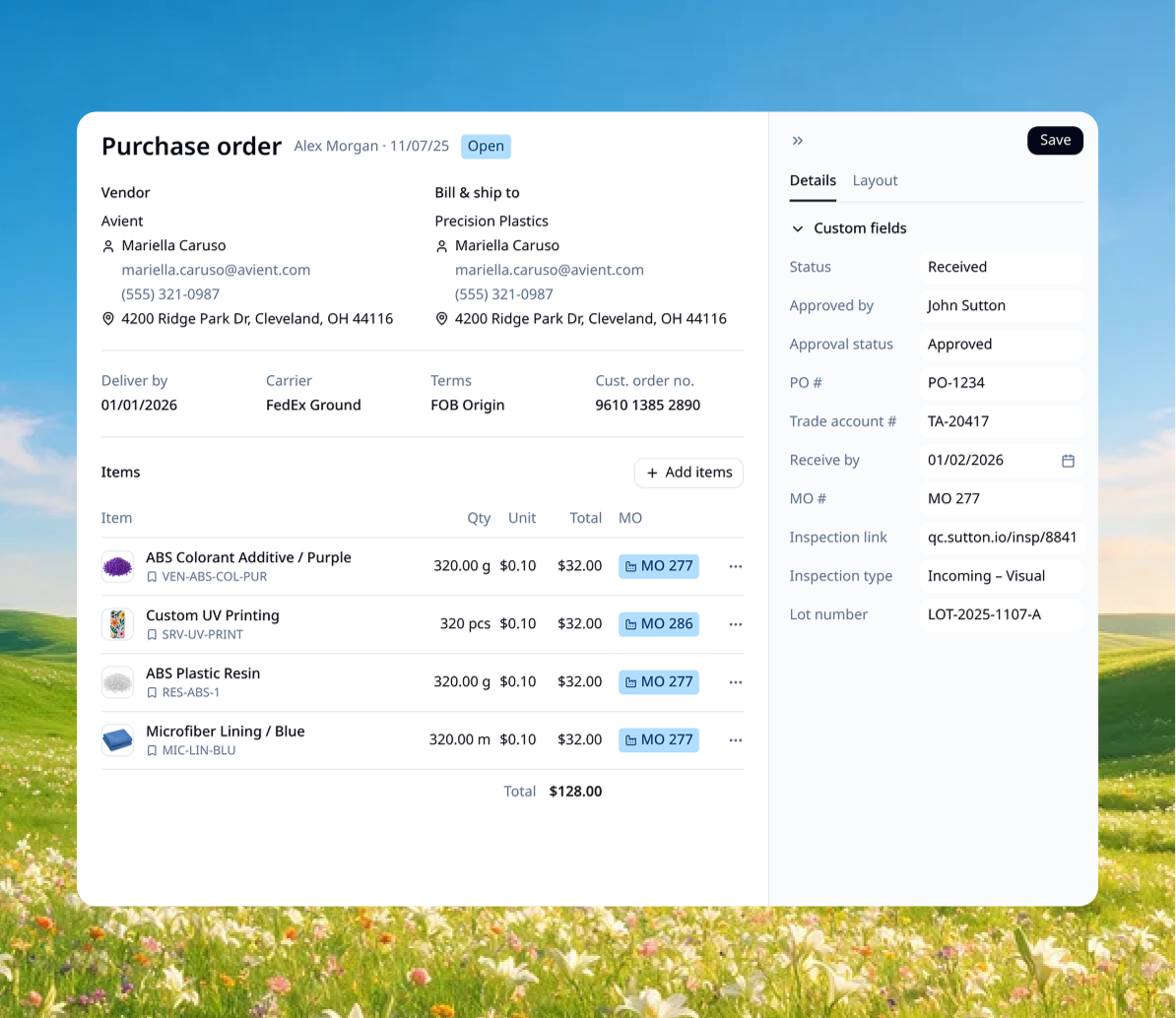
Have jobs that stay on track and production running smoothly. Sutton assists you with live data that helps you prioritize work and stay on schedule.
The Planning view shows upcoming demand and production jobs, so teams can assign target dates and track progress against clear production timelines.
Here's how it works:
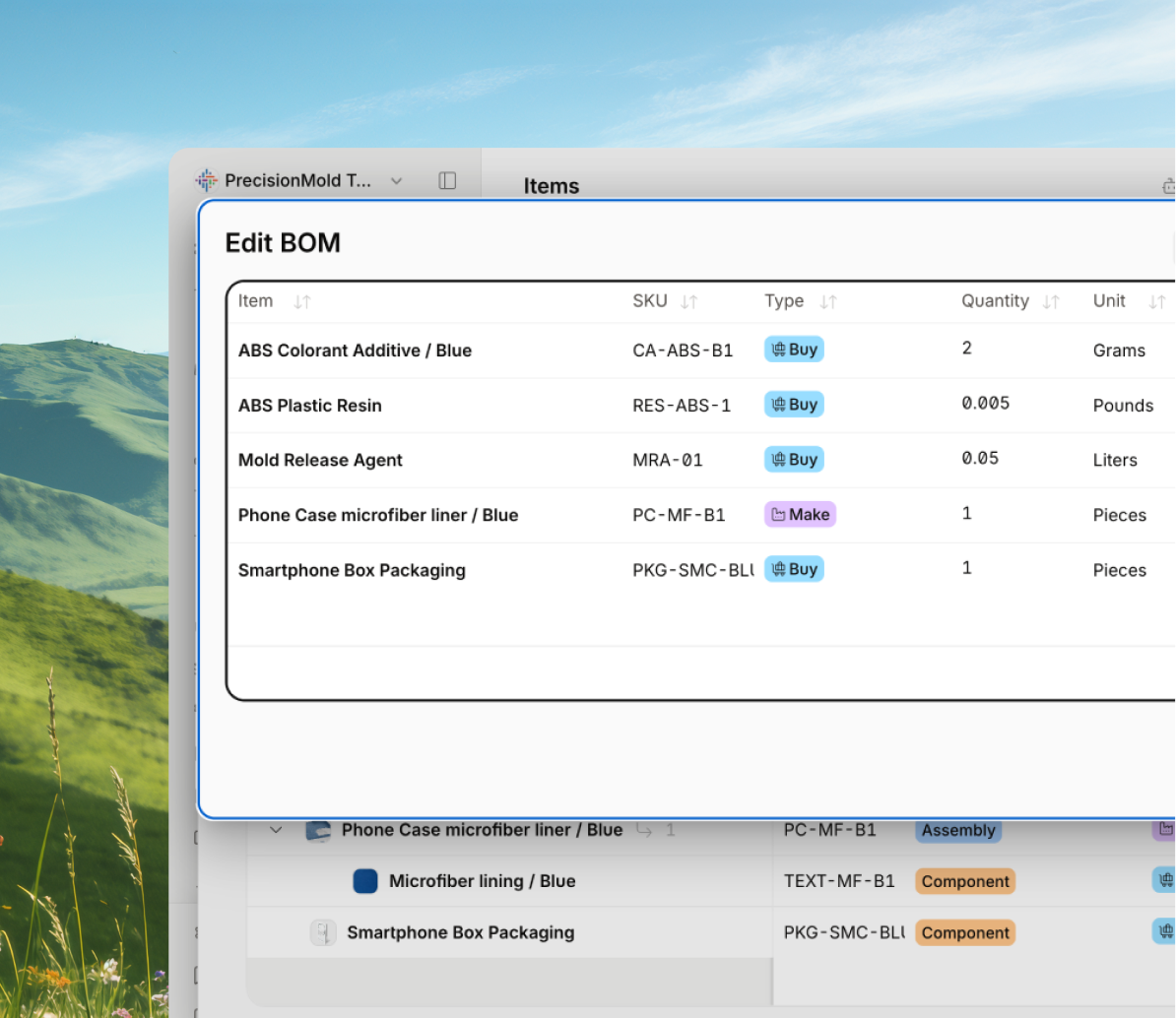
Simplify complex production with accurate, multi-level bill of materials and routings. Use Sutton to build and track products with manufacturing workflows updating in real time.
A BOM defines the components needed for each item, and MOs pull materials and generate work orders automatically.
Here's how it works:
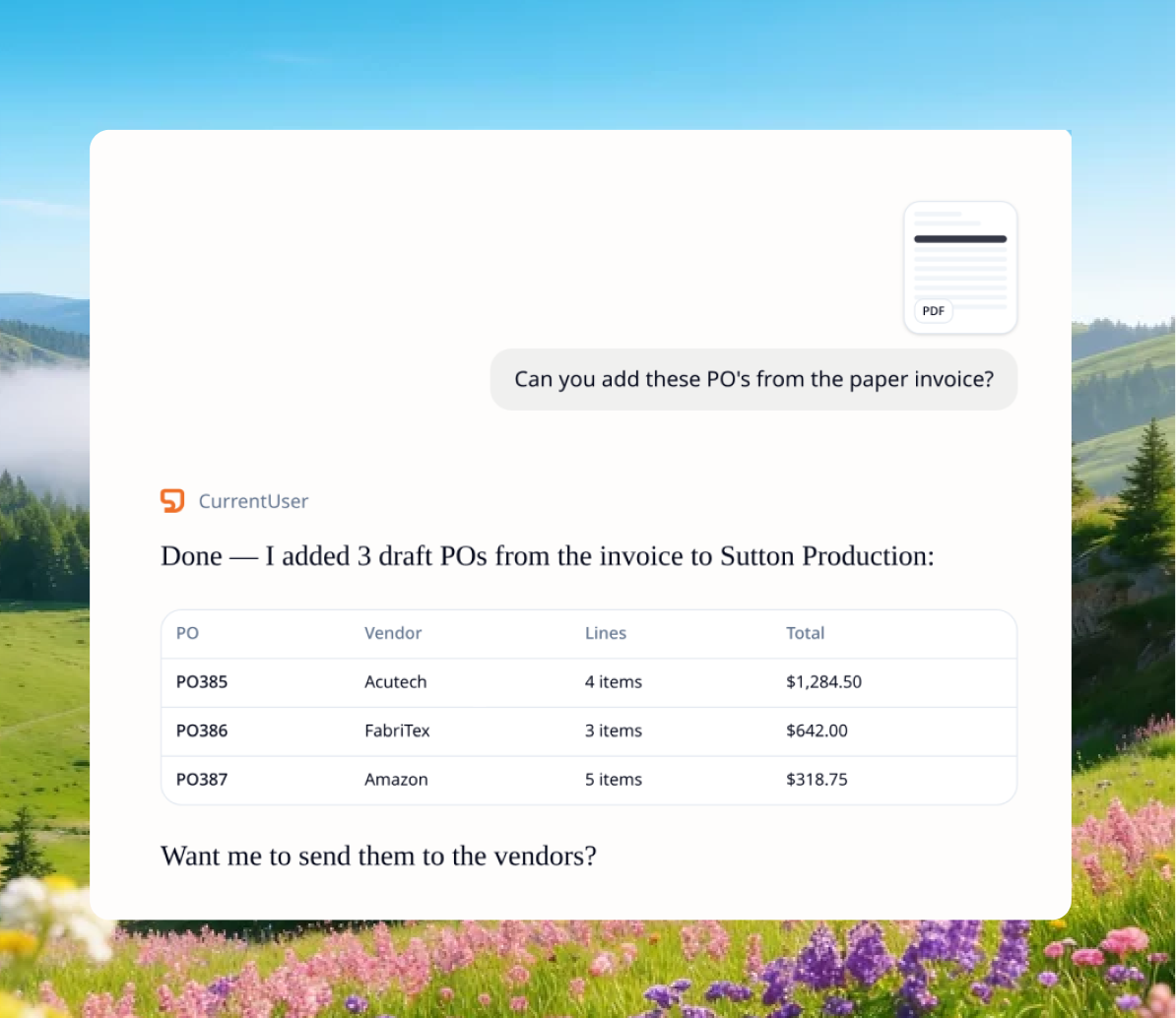
Take control of every purchase. Sutton centralizes your procurement data, tracks orders in real time, and keeps your team aligned from request through shipment receipt. Upload a vendor document, and Sutton reads the file to create a draft PO automatically, removing manual line-entry work. Here's how it works:
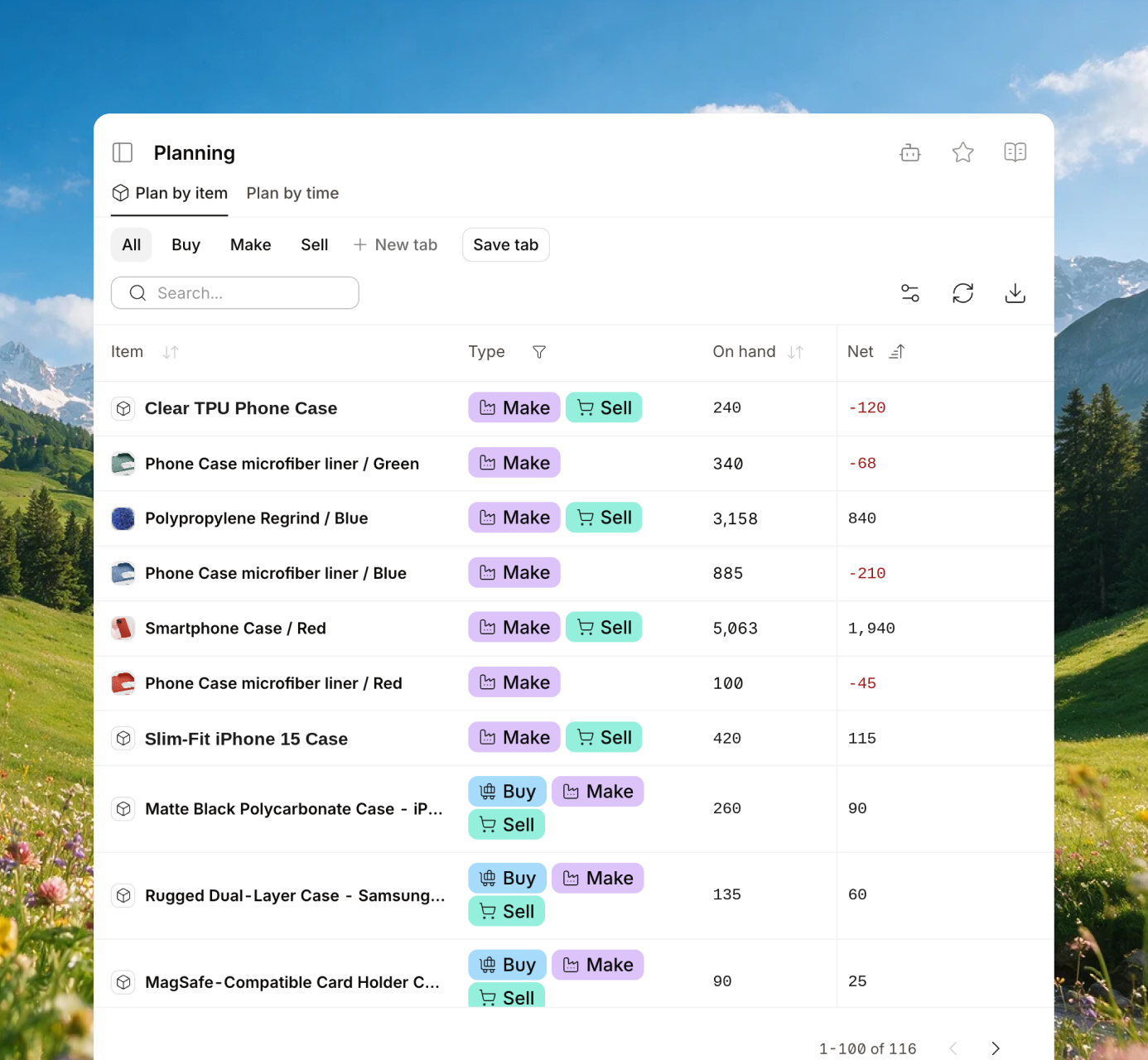
Keep production moving with Sutton. Forecasting and planning help you anticipate what's required to avoid overspending or stockouts.
The Planning view brings together upcoming demand and production capacity in one screen, making it easy to see what to plan next.
Here's how it works:
Sutton connects your MRP and manufacturing data to AI through MCP connectors, letting assistants read your live data.
It can also take supported actions, so you can create or update orders, items, and records without leaving the chat.
Here's how it works:

Bring every sales channel and accounting tool together in one system with seamless syncing and flexible API access.



Keep inventory, finances, and production aligned and trackable in one central source of truth with features made specifically for manufacturers.


100+ manufacturers and distributors have replaced spreadsheets and legacy ERPs with Sutton.

“I don't wanna use the word magical, but you can just communicate like you're communicating with a person.”
Andrew Pedersen



“If I can capture two seconds across 19 machines across a 24-hour span, I'll save the customer thousands of dollars.”
Chris Johnson

“The impact Sutton has had has been enormous, saving a lot of time, capturing a lot of data, streamlining a lot of processes, with a system that everyone loves to use.”
Tanner Thomas


“Sutton has given us the insight into current and upcoming stock on our ingredients and raw materials needed for production. This allows us to procure more before we stock out and to be confident that we have enough to finish any upcoming production run.”
Adam Davis

"Sutton is the most adaptable, user-friendly software we have ever used."
Joe Watkins


Your most frequently asked questions, all in one place. If you don’t see what you need, reach out to us.
AI MRP software is Material Requirements Planning software that adds an AI layer on top of core planning functionality, so teams can query, summarize, and act on their manufacturing data through an AI assistant instead of digging through modules manually.
Sutton is an MRP system: it calculates material requirements from BOMs, tracks inventory in real time, and keeps purchasing and production aligned. The AI layer gives you a way to reach that same data conversationally. It works through an MCP (Model Context Protocol) connector, which lets a connected AI assistant securely read your live data and, where supported, create or update records like Sales Orders and Purchase Orders.
AI MRP builds on the planning logic that makes MRP useful, giving you a faster way to get answers and take action on top of it.
Sutton uses AI through an MCP connector that lets a connected AI assistant securely read and interact with your live Sutton data, rather than working from a static export or an outdated report.
Once connected, it can query live data and use MRP AI features such as:
This means a team member can ask something like "what are the most important orders to focus on today?" and get an answer generated from current Sutton data, without opening multiple screens to piece it together themselves.
Yes.
Sutton connects to AI assistants such as ChatGPT, Claude, and Microsoft Copilot through MCP connectors, giving your team a conversational way to work with MRP data instead of switching between the AI tool and Sutton itself.
Once connected, the assistant can securely read live data, including Sales Orders, Purchase Orders, inventory, and Bills of Materials, and answer questions about what's happening in your operations. Where supported, it can also create or update records, so the assistant becomes a way to act on Sutton data instead of only looking it up.
Any MRP System worth its salt will support the three essential features: bill of materials management, inventory control, and production planning and scheduling.
But, nowadays, MRP systems come in all different shapes and sizes, and the best ones will include:
The key components of an MRP system are:
Together, these three features let the software calculate material requirements, determine what needs to be ordered or produced, and schedule manufacturing.
If you implement MRP software into your business, you will quickly see how it improves your business by giving you precision with accurate data, automation, and visibility into every stage of production along your routes.
MRPs primarily do this by giving you information on how much material is needed to complete a production run, as well as telling you how much you have and don’t have on-hand, and when you can start production based on available or expected materials. This all combines to minimize shortages and overstocking.
An MRP software can help you create optimized production schedules by aligning sales forecasts, the bill of materials, and real-time inventory data to help you lower your inventory carrying costs, including reducing production delays and wastage.
By getting rid of manual planning processes and implementing automation along your production routes, you can save time and prevent errors, while integrating data from your other tools helps you make faster, more informed decisions with accurate insights.
Ultimately, this all results in a leaner, more efficient operation that:
All of which leads to boosted profitability and greater customer and employee satisfaction.
As you're on the hunt for AI MRP software, you have likely stumbled across ERP, which stands for Enterprise Resource Planning.
ERP takes several different departments, like accounting, HR, sales, and manufacturing, and helps you manage all of this in one system (unlike MRP, which focuses only on inventory and operations). It keeps all your company's information centralized and accessible to everyone, so they can see the same data and collaborate more easily across the company. With ERP, leaders can track how the business is doing, spot problems faster, and make smarter decisions. Many modern ERPs are cloud-based, which means you can use them online and add new tools as your business grows.
ERP vs MRP
The biggest difference between ERP and MRP is what they focus on.
A Material Requirements Planning system is made for factories and helps plan what materials are required, how much of each is needed, and when it's needed to build products on time. It helps keep track of materials, orders, and supplies so production doesn’t stop. ERP does a little more than that, connecting every part of a business, including finance, people, sales, and supply chain.
When to Use an AI MRP
AI MRP is best for small or medium manufacturers who need help managing materials and keeping production running smoothly.
It’s a good choice if your biggest needs are fixing stockouts, reducing over-ordering, or avoiding missed deadlines. An MRP gives clear answers about what and how much material you’ll need. It helps teams stay on schedule, reduce waste, and keep costs low.
If your main goal is to plan production and control inventory better, MRP is the right tool.
When to Use an ERP
ERP is better when your company grows and you need to manage more than just production.
It helps connect all parts of the business such as:
ERP is useful for bigger companies or those with more than one location.
It helps leaders see how every department is doing and make better choices for the whole business. If you want one system that handles everything and keeps your teams connected, ERP is the best option.
Yes, a lot of modern MRP systems integrate with accounting software.
This allows your financial data to flow automatically between production and finance teams. When inventory levels change or materials are received, the information updates in both systems, keeping costs accurate and books balanced. Integrating MRP with accounting also helps track the true cost of goods sold, manage supplier payments, and ensure real-time financial visibility across operations.
Yes.
For most manufacturers today, cloud-based MRP is often the better choice because it offers more flexibility, is easier to scale, and has some of the lowest upfront costs. A cloud MRP lets you access your system from anywhere with an internet connection, making it ideal for teams spread across multiple locations or working remotely. Updates and backups happen automatically, so you always have the latest features and security without needing in-house IT support, helping smaller or growing businesses stay agile and competitive without huge infrastructure costs.
An on-premise MRP does have its advantages, but mostly for businesses that require custom solutions or control over its data.
