


.jpg)
What Is a Supply Chain AI Assistant?
AI assistants in the supply chain are artificial tools such as machine learning or natural language processing that can help you and your team make better business decisions by monitoring, automating, and optimizing the full end-to-end supply chain workflow.
Supply chain AI assistants are otherwise known as AI copilots. The reason for this name is that they essentially act as a co-pilot would, assisting the pilot (in this case, the operator) in making sure that all necessary steps are taken and offering alternative advice when an opportunity arises or when a problem is foreseen. And how this tech does this is by perusing data from source points such as manufacturing ERP software or CRM tools and helping operators navigate any unforeseen problems with suggestions on how to improve current workflows.
Understanding Supply Chain AI
With the rise of supply chain assistants, a new term has been coined to describe the new ways of working — supply chain AI.
Supply chain AI refers to the process of implementing any type of AI solution anywhere along the supply chain, from procurement to logistics. It’s a broad term, but ultimately you can consider yourself a part of the supply chain AI network if you have a tool that is either helping you with AI demand forecasting or handling your procurement operations (like finding new vendors and negotiating better terms with suppliers).
Regardless of where exactly you end up adopting AI into your supply chain, the goal of this tech for businesses is usually to help with three main tasks:
- Detect any irregularities within your AI supply chain by using machine learning and pattern recognition to uncover any problems
- Analyze the demand by perpetually reading internal and external data to predict any changes that will affect market demand, material supply, and order lead times
- Recommend (though agentic AI can even perform actions) improvements to procurement, production, inventory management, and logistics
If you’re someone just dipping your toes into the world of supply chain AI assistants, you’ve likely stumbled across a bunch of different AI tools all with different names and functionalities. So, very quickly, let’s look into the different AI tools that someone can use within the supply chain.
Assistant vs. Chatbot vs. Agent: Clearing Up the Terms
Before you can even begin looking into AI tools to incorporate into your supply chain, first you need to understand what each different type does.
So, here is the difference between chatbots, assistants, and agents, and how all three are supply chain AI assistant solutions that tackle the process slightly differently.
Chatbots
Chatbots, as the name suggests, are AI tools that work alongside operators by providing a conversational interface.
They do this by functioning on simple dialogues, taking information from different sources, and providing information that is easier to digest and understand for the operator. It can also improve customer satisfaction by answering basic questions, such as business opening times. However, unlike the rest of these tools, its function is mainly to help people find specific information more easily, and its application is best for limited customer service tasks.
AI Assistants and Copilots
As already covered, AI assistants are digital partners embedded in the main tool your company uses to manage its operations.
Because they work more like a sparring partner, they can handle more complex tasks that require multiple steps by working alongside the operator. A supply chain AI assistant can perform tasks that require explanation, such as:
- Onboard new operators by taking them through the standard operating procedures
- Assist your procurement or production team with demand forecasting calculations
- Summarize company meetings or email threads into something quicker to read
- Recommend corrective actions within the supply chain or draft operational documentation
While a supply chain AI assistant can take on a larger workload than a chatbot, it doesn’t operate independently, and an operator must review and approve any corrective suggestions.
Unlike the next AI solution.
AI Agents
Just like the agents from the movie franchise The Matrix — these AI tools can operate independently and get stuff done without any intervention from a human.
Similar to the supply chain AI assistants, an AI agent is able to monitor company data in real time. However, the difference here is that if it notices a problem along the supply chain, it can autonomously execute a solution. For this to work, the AI agent needs a goal, such as keeping stock levels within a certain threshold. The agent will continuously monitor inventory and will place a reorder or create a manufacturing order if stock levels breach that threshold.
However, the goal you ask your agent to achieve could be anything, like quality assurance checks.
These AI agents might sound slightly more threatening than the other supply chain AI assistants we’ve covered, but they will only operate within the guidelines you set for them, and can even have their autonomy switched off if you would prefer to have a human still involved in any decision-making.
Why Supply Chain Teams Are Adopting AI Assistants
As you can already imagine from the previous section, supply chain AI assistants are already powerful enough to help reduce a lot of time and costs around supply chain management, especially given how volatile global supply chains have been over the last decade.
Supply chain AI assistants can continuously monitor internal and global data points, something manual workflows and periodic reporting could never achieve. And a lot of businesses have already come to terms with this reality, according to a report published by Gartner, 74% of supply chain managers see AI as the biggest driver transforming operations around the world.
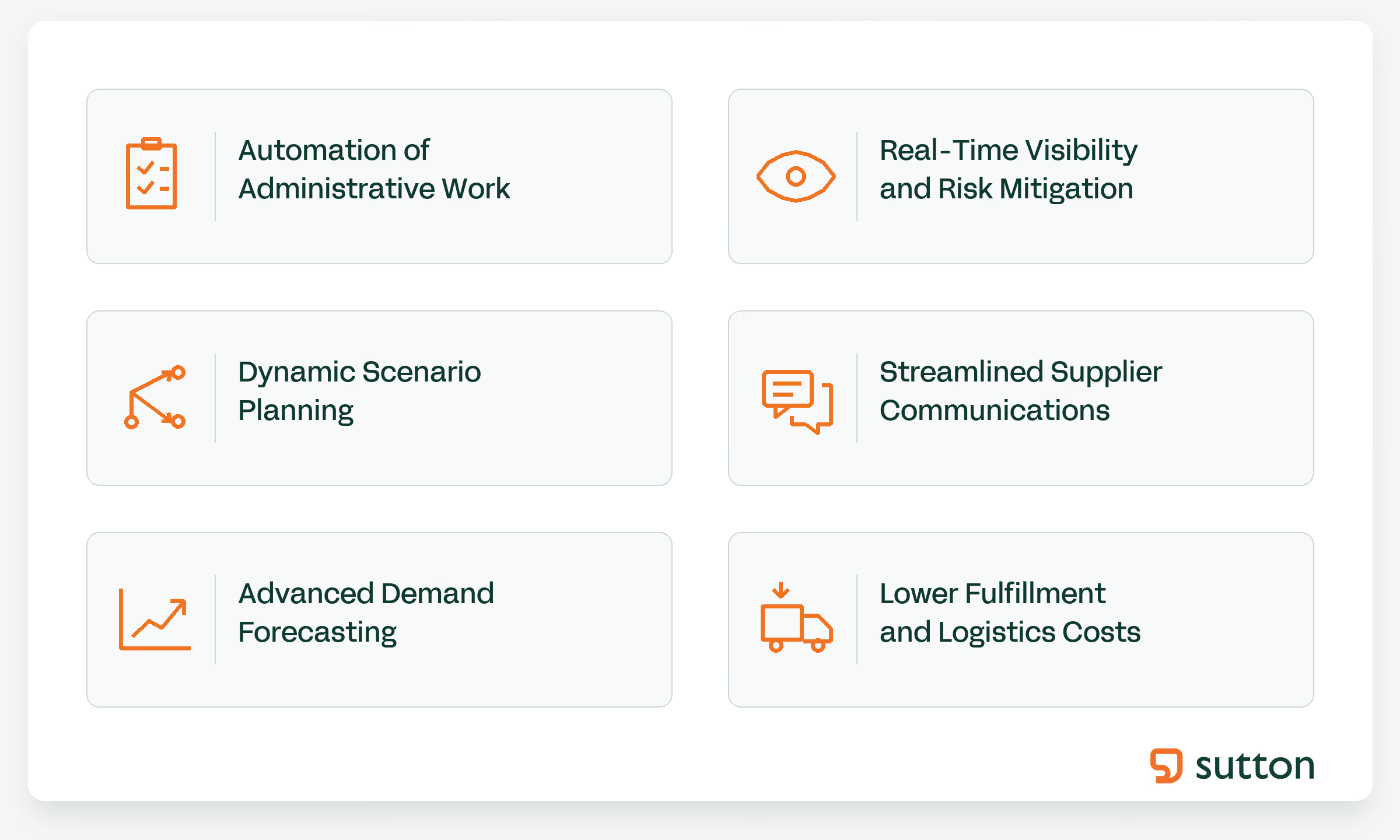
Here are six reasons why many businesses are starting to incorporate supply chain AI assistants into their operations.
1. Automation of Administrative Work
There are a lot of things an operator, and even your financial team, need to do to keep everything moving along, things like:
- Order processing
- Invoice matching
- Purchase order consolidation
- Shipment tracking
By handing this day-to-day repetitive work over to a supply chain AI assistant, you can free up your team to keep focused on the higher-value activities for your business.
2. Real-Time Visibility and Risk Mitigation
There are a bunch of different ways you can incorporate supply chain AI assistants into your business.
But there’s one area that is basically impossible for a human operator to achieve, and that is the 24/7 analysis of different data points simultaneously, such as:
- Location sensors
- Weather reports
- Transport networks
Your supply chain AI assistants can monitor these channels to identify delays, flag potential inventory shortages, and escalate operational issues as they happen, or even before they do.
3. Dynamic Scenario Planning
Your supply chain AI assistants are capable of performing “what-if” simulations and testing different transit routes to find the best path to keep the supply chain moving by analyzing:
- Live traffic
- Weather
- Fuel pricing
4. Streamlined Supplier Communications
Your supply chain AI assistants can handle simple tasks like back-and-forth emails between customers and suppliers and provide status updates to anyone requesting them.
They can also help your procurement team better understand vendor performance by converting unstructured vendor messages into auditable, structured data.
5. Advanced Demand Forecasting
Demand planning and forecasting have always been a long and arduous process for managers.
But supply chain AI assistants, especially machine learning models, can look into historical data to see trends, find any regional sales spikes, and identify seasonal buying behavior to create a forecast that is close to 95% accurate.
6. Lower Fulfillment and Logistics Costs
Finally, a benefit we have been touching on throughout this section, but still deserves its own shout-out, is the amount of time and money it saves.
Using supply chain AI assistants to automate your processes and operations means less time doing rework of any mistakes accidentally made by a careless operator and less manual work for you and your team. All of this leads to an improved fulfillment rate and lower logistics expenses.
What a Supply Chain AI Assistant Can Do
AI assistants for supply chain operations are great because they can take over routine tasks and turn raw data from different sources into something understandable, helping you and your team make better, more informed decisions.
So, here’s exactly what an AI assistant for supply chain planners can help you and your business do to take things to the next level:
Your demand forecast can often be created, and before you’ve even shared it with the rest of your team, you’ve found out that something out there has made your current plans redundant.
Because AI in material resource planning is constantly reviewing historical data and real-time trends (internal and external), anything that can potentially change the current forecast is considered, and the plans are updated in real time. This means you get to enjoy things like:
- A balanced safety stock
- Reduced excess inventory
- Automatically corrected stock balances
Here’s how the best AI assistant for supply chain planners helps businesses based on the industries that they serve:
Heavy Industry and Mining
Assistants evaluate sensor data from critical equipment like trucks and drills to predict maintenance needs before mechanical failures happen.
Route optimization tools also direct autonomous haulage vehicles to save fuel and improve transit speed.
Warehousing and Retail
Systems analyze order histories and product movement to forecast sales trends and restructure warehouse layouts.
This layout optimization maximizes physical space and shortens item retrieval times for faster fulfillment.
Healthcare, Food, and Beverage
In sectors with strict storage requirements, AI tools track temperature-sensitive cold chains for pharmaceuticals, vaccines, and perishable food products.
They monitor transit conditions to lower spoilage risks and ensure regulatory compliance.
Target Narrow Pain Points First
Companies that target distinct challenges like demand forecasting or exception management achieve measurable returns much faster than organizations trying to automate entire networks at once.
How AI Assistants Connect to Your Data
Isolated large language models depend on static training data, leaving them unable to access real-time operational records.
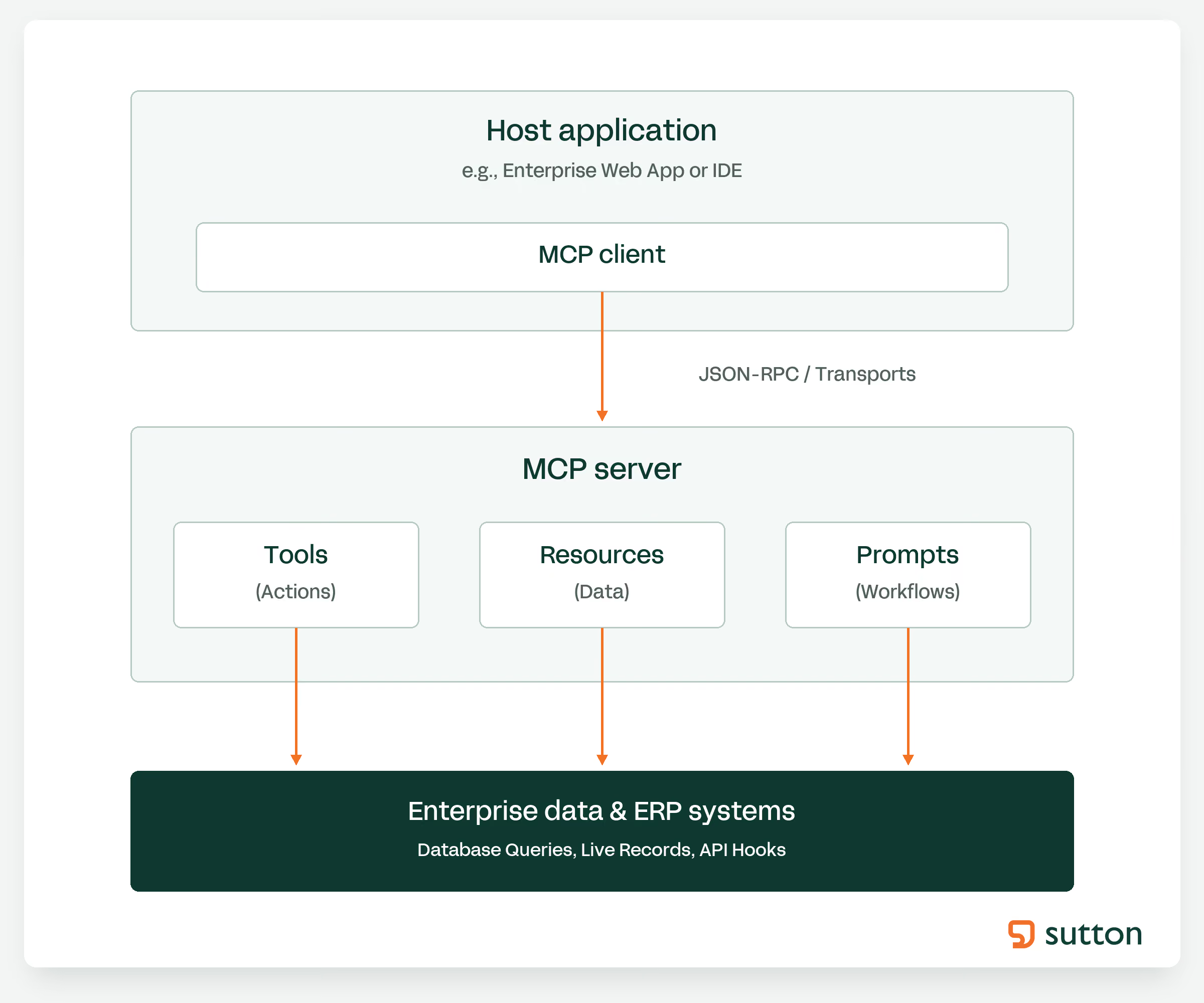
To bridge this gap, modern AI architectures use the open-source Model Context Protocol (MCP), a universal client-server standard that connects AI applications to internal business systems.
Architecture and Core Primitives
The MCP relies on three structural components to establish connectivity:
- The Host Application: The user interface or software environment where prompts are initiated.
- The MCP Client: An embedded module inside the host that manages connections and translates user requests.
- The MCP Server: A specialized program connected to databases, local files, or ERP software.
The MCP server exposes backend capabilities through three main building blocks:
- Tools: Actions the AI triggers to execute operations, such as creating purchase orders, querying databases, or updating inventory logs.
- Resources: Readable data streams, including customer records, spreadsheets, and live operational feeds.
- Prompt Templates: Pre-structured instructions that direct the assistant through specific multi-step workflows.
Communication Workflow and Benefits
When a user asks a question, the client and server execute an initial handshake to verify security protocols and discover available tools.
The assistant then issues a targeted request to the server, which executes the action inside the connected enterprise software while maintaining native user permissions. Finally, the server returns structured data to the assistant to generate a precise answer.
Using a single protocol eliminates the need for custom, one-off integrations across separate tools. Because servers operate independently, an integration error will not crash the assistant. This independence provides secure access to live enterprise data without compromising system stability.
What to Look for in a Supply Chain AI Assistant
Selecting an effective supply chain AI assistant requires moving past basic conversational bots toward systems capable of active execution, deep data integration, and broad network visibility.
Natural Language Processing and Querying
The assistant translates plain-language questions into complex database queries, automated documentation, and instant reports without requiring manual command syntax or code.
Agentic Workflow Execution
Digital assistants interpret operational context, spot anomalies like port delays or stockouts, evaluate alternatives, and actively trigger actions such as drafting purchase orders or updating production schedules.
Unstructured Data Parsing
The software processes unstructured documents and extracts structured operational data into core systems.
Supported documents include:
- Emails
- PDFs
- Bills of lading
- Packing lists
- Supplier contracts
- Invoices
Predictive Analytics
Tools execute real-time simulations to forecast demand shifts by analyzing internal sales feeds alongside external signals like weather patterns and market news.
Deep System Connectivity
Systems connect natively or via APIs to existing ERP, Warehouse Management, and Transportation Management platforms.
Human-in-the-Loop Validation
To prevent hallucinated outputs from disrupting operations, system architectures allow human managers to review automated actions, check underlying code queries, and enforce permission boundaries.
Enterprise Security and Compliance
Platforms enforce data encryption, role-based access controls, audit logging, and compliance with regional data privacy regulations.
And there you have it! Everything you need to know about AI assistants for supply chain operations.
If you’re looking to overhaul your current business operations management system as well as integrate your AI tools into a system that is designed to work alongside your solutions, then we recommend checking out Sutton.
Sutton's Approach to AI Supply Chain Assistance
Sutton is an operations platform that helps businesses centralize:
- Inventory
- Orders
- Production
Sutton provides an MCP connector that links external AI assistants to live operational systems. This architecture grants the assistant secure, real-time access to active operational records.
Real-Time Data Access
Once connected, an AI assistant queries active enterprise records. Sutton continuously reads and analyzes several operational areas:
- Sales and Purchase Order Management — Assistants query open sales orders, purchase orders, price quotes, and specific line items across the network.
- Inventory and Warehouse Tracking — The supply chain AI assistant monitors real-time inventory levels, specific lot information, and precise warehouse storage locations.
- Manufacturing and Item Cataloging — Assistants browse complete item catalogs, multi-level bills of materials, and production structures.
- Operational Order Execution — Assistants also update existing records or generate new sales orders, purchase orders, and item entries inside the primary database.
Secure System Integration
To establish connectivity, operators add Sutton as an MCP connector inside their chosen AI host application using the dedicated server URL located under system settings. Authentication relies on OAuth protocols to enforce security and access control.
An MCP-connected assistant reads live operational data in real time and grounds its reasoning in current business records, something static knowledge-base tools, which only explain software features, cannot do.
Want to see this in action with data that represents your typical workflow? You can book a call with one of our supply chain specialists who can take you on a personalized demo of Sutton to show you how it can partner with your supply chain AI assistant and take your operations to the next level.