



What Is Agentic AI?

Agentic AI refers to a collection of AI systems that move beyond analysis or making recommendations to a human operator and act autonomously, following multiple steps to achieve a goal.
So, most typical manufacturing software will track operations or inventory and display that information for a human to interpret and act on what to do next. But with agentic AI in manufacturing, what happens is that these AI tools track the same information, but analyze the state of something, reason about what should happen next, and execute the solution itself and update all the relevant information.
For example, let's say inventory levels are starting to dip at a rate that will quickly lead to a stockout. Agentic AI in manufacturing can see that and place a purchase order or manufacturing order to top up that stock.
But let's not confuse this with an AI agent, as an AI agent is usually built to perform one task and flag any issues. But agentic AI sees a problem and continuously attempts to solve it until it finds a solution.
However, if all this sounds scary and you're worried about the agentic AI going rogue, don't worry. Agentic AI in manufacturing can only operate within the parameters that you set, and if you want to adjust its procedures because it did something you didn't like or you'd like it to do more, you can increase or decrease its scope.
Agentic AI vs. Generative AI vs. Predictive AI
We slightly touched on how agentic AI and AI agents are different, and if you're exploring this topic, you've probably stumbled upon lots of different versions of AI. So, let's quickly clear up the differences between:
- Agentic AI
- Generative AI
- Predictive AI
1. Predictive AI
Using predictive AI, the tool analyzes historical and real-time data to forecast when a machine is likely to break down, then calculates the probability distribution of the time until it needs repair, and, based on that probability, a person can decide what to do next. This type of AI is essential in predictive maintenance and demand forecasting.
2. Generative AI
Generative AI is a tool that produces new content, such as images or text-based documents, based on prompts.
This type of AI is reactive and can be used to create marketing materials, generate content for use in production when relevant, or document manufacturing processes, such as logging work orders or drafting manufacturing instructions. Generative AI only produces something when asked.
3. Agentic AI
Agentic AI can perform predictive analysis and even generate content, all without requiring a human to direct each step.
Once it's configured with a defined scope, it gathers information, reasons about what to do, and executes solutions on its own — while still operating within the boundaries a person set upfront.
What Makes an AI System "Agentic"
So, back to the topic of agentic AI in manufacturing, it's not actually the autonomous actions it performs that make a system agentic or not.
For a tool to be considered agentic, it needs to have several functions all working in unison to complete the tasks it's been assigned.
Perception
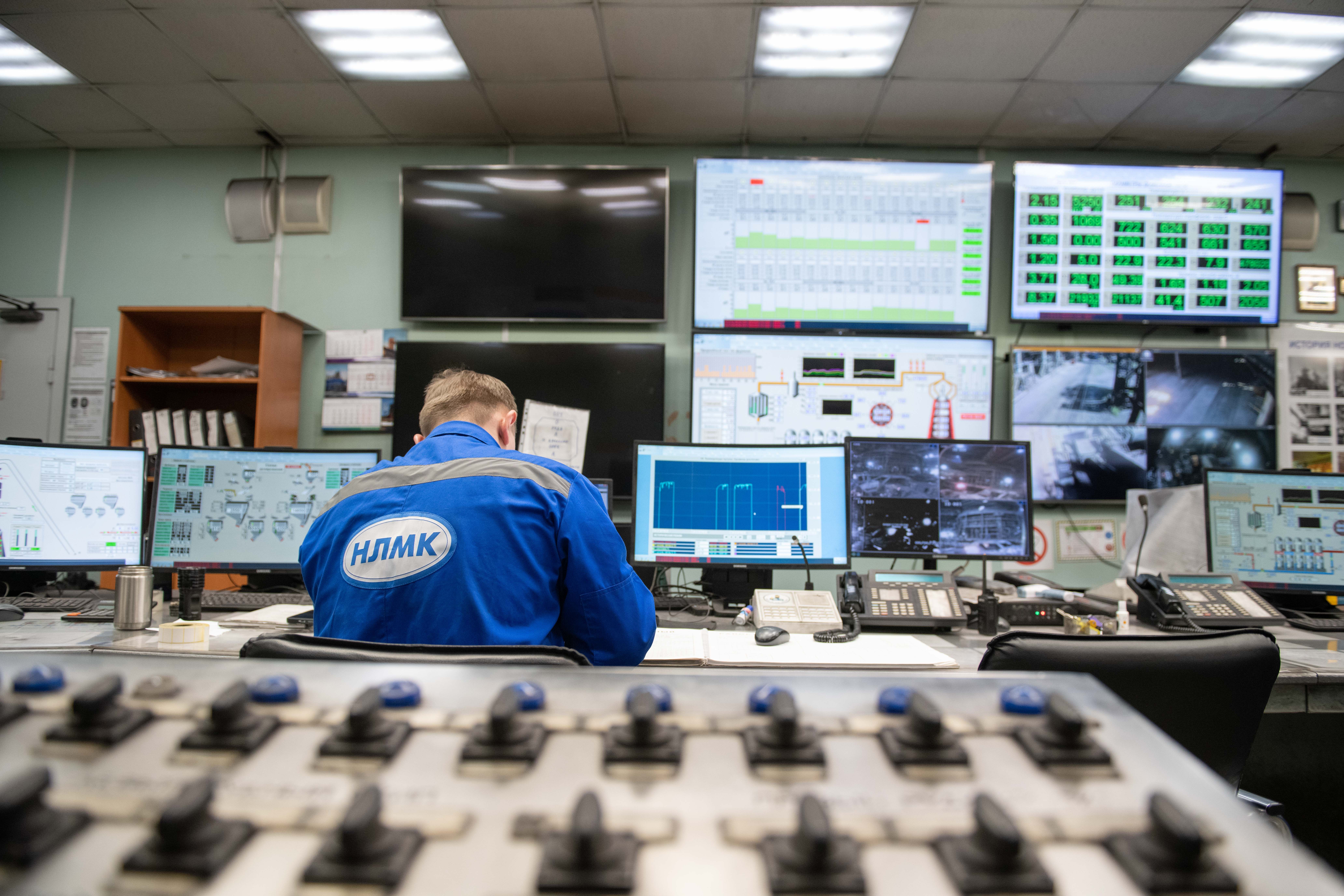
Starting with perception, agentic AI manufacturing systems perpetually pull in data from your other tools to read and understand what is happening on your shop floor. It can gather this data from several feeds to get a clearer understanding of your operations, pulling data from:
- Sensors
- Video feeds
- Production logs
- Manufacturing ERP software
Contextual Reasoning
Based on the context you have given the agentic AI tool, instead of any probability calculations or pattern recognition, it will analyze and make decisions based on what's happening, based on your:
- Standard Operating Procedures
- Quality guidelines
- Digital twin simulations
Planning and Coordination
Now, with context loaded and its responsibilities defined, once it identifies a problem, it breaks it down into sub-tasks, assigns the fixing of each to specialized agents, and coordinates those agents to determine the best way to proceed. These agents could be specialized, with one focused on handling a quality issue and another on a logistics issue.
Execution Across Systems
Once the problem has been flagged and agents assigned, the agentic AI solution goes ahead and takes action itself in whatever software you use to manage your production, and the actions it can take can be things like:
- Adjusting a line speed
- Generating a work order
- Rerouting a shipment
Adaptation
Your agentic AI for manufacturing tool will keep updating its approach to finding solutions as your operations change over time, so that it stops applying fixes based on outdated context and instead applies fixes that reflect current conditions.
Finding an agentic AI ERP with all five of these traits means using a solution that acts within the guardrails you set.
How Agentic AI Works in Manufacturing
.jpg)
You now understand, in essence, how agentic AI in a manufacturing solution functions, but we haven't yet explained exactly how, step by step.
Below are the 4 steps a tool follows as it analyzes your production, makes decisions, and applies fixes based on your shop floor conditions.
Starting with:
- Sensing — You set up how the AI tool collects data, usually in real-time from machines, cameras, and production logs, to build a picture of what’s happening on your shop floor.
- Evaluation — Based on that picture it gathers, it continuously reviews your SOPs, quality thresholds, and how a digital twin says the process should behave, and based on its reviews, it will understand if any deviations are occurring or not.
- Orchestration — Once it does see a deviation somewhere, the orchestrator agent gets to work, creating tasks and assigning them to the relevant AI agents who are designed to fix specific problems.
- Action — Once the orchestrator has created and assigned tasks, it operates within the guardrails you’ve set and begins executing the solution it has developed, without any need for a human operator to sign off.
And that's that: agentic AI in a manufacturing solution, in action.
Agentic AI Use Cases in Manufacturing
.jpg)
When determining if an agentic AI solution is suitable for your business, the most capable ones on the market operate in all four of the following areas:
- Procurement acts on inventory signals before anyone notices
- Scheduling that absorbs disruption without a planning meeting
- Maintenance that turns a sensor anomaly into a work order
- Inventory that rebalances against demand before a shortage appears
Autonomous Replenishment and Purchasing
Replenishment traditionally runs on static reorder points:
- A threshold is crossed
- A requisition gets generated
- A buyer works the supplier relationship manually
An agentic version closes the loop itself — flagging a projected shortage, checking stock across plants, and placing or splitting the order before a buyer opens the ticket.
People stay involved in decisions with real financial exposure as routine reordering runs on its own.
Sutton is a manufacturing ERP built to give agentic AI a single, connected system to act on.
How Sutton does this: a connected AI assistant can check inventory in Sutton and create the purchase order in the same conversation.
Exception Handling in Production Scheduling
Production schedules assume machines, labor, and materials will be available as planned.
When a machine goes down or a rush order lands, a traditionally scheduled plant waits for the next planning cycle — often after the disruption has spread downstream.
An agentic system re-sequences the plan itself in minutes, weighing changeover time, labor, and inventory buffers. Most manufacturers still run this in recommendation mode (the agent proposes, a planner approves), which is reasonable given how much scheduling touches customer commitments.
How Sutton does this: Sutton flags mismatched material picks, and a connected assistant can suggest a fix from live data.
From Predictive Maintenance Alert to Autonomous Work-Order Creation
A predictive model analyzes sensor data and detects early signs that a bearing is beginning to fail. In a standard setup, it sends an alert to a technician so someone can take over from there.
An agentic system continues past the alert:
- Checking spare parts
- Confirming an available technician
- Finding a service window
- Generating the work order
Low confidence routes it to a person instead. It tends to be one of the faster use cases to show return, since the data is already digitized at most plants.
How Sutton does this: Sutton's Open API can trigger a Manufacturing Order directly from an external alert.
Demand-Sensing and Inventory Rebalancing
Replenishment reacts to a threshold being crossed since demand-sensing tries to get ahead of it, using live demand signals to predict a shortage or surplus before it hits a stock report.
An agentic system scores inventory risk and rebalances stock across plants rather than treating each site in isolation — most useful where demand is volatile, though it depends more on forecasting accuracy and typically takes longer to reach full autonomy.
How Sutton does this: a connected assistant can query sales orders and stock in Sutton to suggest rebalancing or generate needed purchase orders.
Why Agentic AI Needs a Single Source of Truth

Everything covered so far assumes the agent has good information to act on.
What most agentic AI projects get wrong is failing to realize that an agent acting on fragmented or stale data will make the wrong decisions at machine speed. A maintenance agent checking parts inventory against disagreeing records won't pause to ask which is right, since it acts on whichever it finds first.
This is the core reason most agentic AI programs stall well short of what the pilot demonstrated.
Research on enterprise AI deployment shows that the large majority of generative AI pilots deliver no measurable return, and a similar gap separates organizations that get one use case working from the far smaller number that scale AI across the business. The common thread isn't the model — it's that business definitions stay scattered across spreadsheets and disconnected systems that disagree on basics like which inventory figure is current. Point an agent at that environment, and it won't recognize the disagreement, and it'll pick an answer and act.
A single source of truth closes that gap — a governed, shared definition of what data means, so "current inventory" resolves the same way no matter which system or agent is asking. This is what a system like Sutton is built to provide:
The Realistic Risks and Limits of Agentic AI
%20(1).jpg)
Autonomous action cuts both ways.
The same system that closes a work order unprompted can just as easily place the wrong purchase order, reschedule production around a constraint that no longer applies, or approve a supplier substitution nobody would have signed off on by hand — at the same speed and confidence as when it gets things right. Reliability and risk scale together, which is why the use cases above drew a line between agents in recommendation mode, where a person signs off before anything executes, and agents trusted with full execution authority.
Most manufacturers are still on the recommendation side of that line beyond a handful of narrow, high-confidence workflows.
There's a second layer that's easy to miss, which is proving what happened after the fact.
When an agent submits an order or changes a schedule, someone eventually asks who authorized it and whether the record can be trusted. The agent protocols emerging from major platforms handle execution well but largely leave this identity question open.
If an agent places a large parts order, can you show who approved it and when, independent of the agent's own logs? Getting the data foundation right keeps an agent from acting on bad information.
How to Prepare Your Operations for Agentic AI
Everything in this article assumes an agent that can act reliably.
Getting there is less about picking the right use case first than about building the foundation underneath it — most plants aren't at "act" yet, and skipping ahead is how an agent ends up reasoning confidently over data nobody trusts.
Build the Data Foundation First
First, you need to set up how the data will be captured.
You'll need to get production activity (counts, downtime, quality checks) recorded digitally at the point of work rather than on paper or in spreadsheets.
From there, the agent needs context it can read, pulled from the ERP, MES, and QMS you use.
Set Bounded Permissions Before You Need Them
Before an agent touches anything, write down what it can do on its own and what requires a named person's approval, and start narrow. Anything related to product disposition, scheduling, or customer commitments is pending approval. Every action should be logged and traceable back to the data behind it — the NIST AI Risk Management Framework's govern-map-measure-manage structure is a useful shared reference for quality and IT.
Start Small, Measure, Then Widen
Pick one high-frequency, low-risk workflow and measure the baseline first:
Digitize the capture if it's still on paper, run the agent with approval required on everything for a few weeks, then move actions to "automatic" only once they've earned it.
.jpg)

%20(1)%20(1)%20(1).jpg)