


%20(1)%20(1)%20(1).jpg)
What Is Cannabis Manufacturing Compliance?

Cannabis manufacturing compliance simply refers to everything that goes into helping keep consumers safe with legal and regulatory safeguards, as well as quality-control requirements that are designed to inform how cannabis products are made, including:
As of now, generally speaking, cannabis is still federally illegal in the U.S. However, it is moving from Schedule I to Schedule III for FDA-approved marijuana products and state-licensed medical marijuana.
What this all means is that compliance falls to individual states rather than the country, with each state setting its own testing and packaging requirements. Because of this, cannabis manufacturers operating in multiple states must maintain separate compliance protocols for each jurisdiction.
And getting this wrong can have serious consequences that we will cover in the following section.
5 Reasons Why Cannabis Compliance Is Uniquely Complex
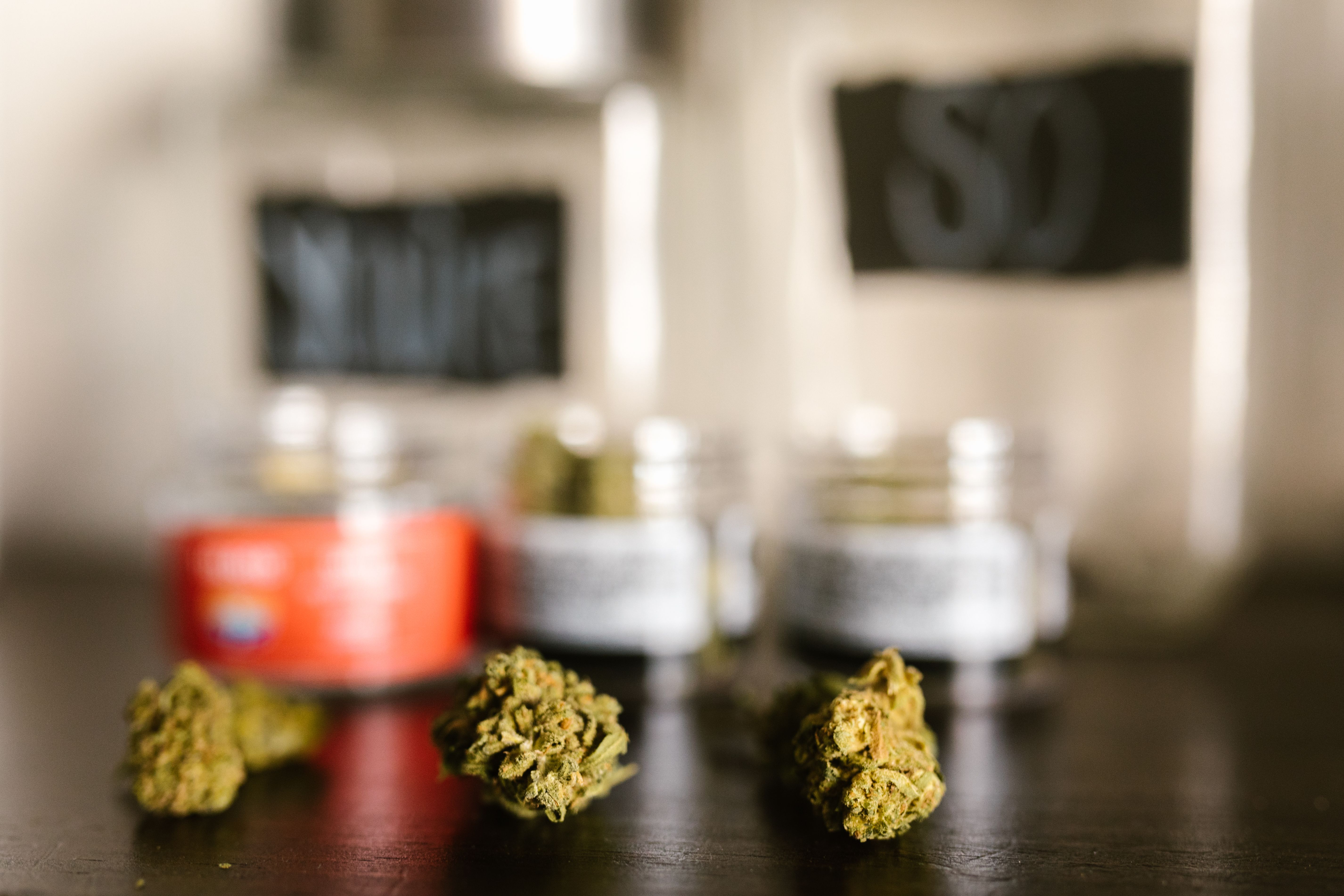
As the legalization of certain cannabis products increases, businesses that use these materials are subject to more regulatory burdens than many other industries face.
For example, where some businesses just need to navigate a single set of federal and state rules, cannabis manufacturers must navigate evolving laws and regulations that can conflict with one another, with the added pressure of having to deal with the fragmented patchwork of local state requirements (with an extra cherry on top if you operate across state borders and need to manage a supply chain). That's why we put together the following list of the five reasons as to why cannabis compliance can be convoluted to navigate.
Starting with:
1. The State-by-State Regulatory Patchwork
As we already touched on, even though it's been rescheduled, cannabis is still illegal federally, while more states than not have now legalized it.
But this state-by-state approach to legalization means that there's no shared federal baseline to build upon. Each state sets its own limits on:
- Potency
- Licensing tiers
- Permitted product types
If you're planning to operate across multiple states, a framework that works in one will almost certainly not work in another.
Every time you want to open up a new market in a new state, you're going to need to build your cannabis manufacturing compliance program from scratch:
- Cultivation
- Processing
- Testing
- Retailing
And just when you thought you were out of the weeds… You have to deal with local zoning laws, too, as municipalities impose their own siting restrictions and environmental mandates. Basically, this means there's no single, consistent definition of cannabis manufacturing compliance.
2. Seed-to-Sale Compliance Traceability and METRC Compliance Reporting
Almost all jurisdictions in the U.S. where you can operate tend to require perpetual digital documentation and tracking of cannabis products from cultivation through final sale.
For example, 20 states currently require cannabis manufacturers to use the METRC compliance system. What this means is that wherever cannabis is being manufactured, every batch and finished product must get a unique identifier that stays with it through:
- Cultivation
- Processing
- Testing
- Packaging
- Distribution
Licensees assume full responsibility for the accuracy of the data recorded above.
3. Lot Tracking and Batch Records in Cannabis Production
Along with following seed-to-sale compliance requirements for each state that you operate in, it is a cannabis manufacturer's responsibility to document the entire manufacturing process for each batch.
To do this, you will need to develop and maintain a batch record (either manually or by using cannabis manufacturing software) to track:
- The materials that went into a product
- Where those materials came from
- How much went into the batch
- Equipment used
- Staff involved in the manufacturing process
- The yield you expected to get and what was actually produced
- Lab results confirming that the finished product is safe
The purpose of saving this information and attaching it to your products and batches is to enable recalls if needed. And this is one of the reasons why the documentation process for cannabis manufacturing compliance is a lot more extensive than for most other businesses.
4. Testing, COAs, and Quality Compliance
As we already mentioned, states being allowed to decide how they want to legalize cannabis is a relatively new experience in America, and because of this, every single product that is destined to reach a dispensary needs to be cleared by lab tests covering:
- Potency
- Contaminants
- Microbials
- Residual solvents
The lab that clears your products also needs cannabis-specific accreditation under ISO/IEC 17025.
If you want to sell cannabis products anywhere in America, the Certificate of Analysis is what you'll need to prove the safety and label accuracy of your products to regulators, retailers, and consumers.
5. Packaging, Labeling, and Child-Resistance Requirements
Packaging has to satisfy two requirements that pull in different directions (keeping products inaccessible to children while remaining fully usable for adults), and it has to do this while also communicating everything a regulator requires on the label.
Child-resistant packaging is tested against specific performance thresholds and must be certified under standards like CFR Title 16 Part 1700 or ASTM, with the certification format varying by product type and by state.
Beyond child-resistance, packaging generally needs to be tamper-evident and, for edibles, opaque, while labels must disclose potency, batch numbers, and mandatory warnings without including anything that could be read as appealing to minors.
Because these standards differ by state and are enforced actively, packaging decisions have to be revisited every time a product enters a new market rather than treated as a one-time design choice.
Inventory Reconciliation and Waste Tracking
.jpg)
Inventory reconciliation is the ongoing process of confirming that physical stock on the ground matches what's recorded in the compliance system, and it has to hold at every stage of manufacturing, not just at annual audit time.
Inventory Reconciliation in Manufacturing
Manufacturers convert raw inputs into finished goods using a Bill of Materials or recipe format, logging exactly how much biomass or flower went into a given production run and what it yielded.
Regular cycle counts then compare physical inventory against those digital records, and any discrepancy (whether from a scale error, a data entry mistake, or evaporation loss during processing) has to be investigated and documented immediately rather than adjusted away quietly.
Because these physical counts have to stay in sync with the state's tracking platform, a mismatch that goes unresolved is treated as a compliance flag on its own, independent of whether an actual loss occurred.
Waste Tracking and Rendering
Manufacturing waste has to be weighed and logged before it's disposed of, including:
- Trim
- Stems
- Extracted plant material left over from processing
- Entire batches that failed testing
Before disposal, that waste generally has to be rendered unusable and unrecognizable, most often by grinding it and mixing it roughly 50/50 with a non-cannabis material like soil, cat litter, or paper, specifically to prevent it from being diverted back into any market.
Until that happens, waste is typically required to sit in locked, labeled containers, sometimes under video surveillance, rather than in general storage.
Waste Categories and Documentation
Waste generally falls into three categories that are handled differently:
- Biomass — stems, stalks, fan leaves
- Product waste — failed test batches, expired edibles, contaminated concentrates
- Hazardous or universal waste — extraction solvents or vape batteries
Whatever the category, destruction has to be documented (weight, reason for disposal, witness signatures, and disposal method), with those records typically retained for a minimum of three years to satisfy an audit.
The Cost of Non-Compliance: License Risk and Recalls

Non-compliance carries costs that compound quickly, moving from administrative fines to license loss with little room for a company to absorb the damage along the way.
Financial Penalties and Fines
First-offense fines for issues like inventory or tracking discrepancies typically start in the $1,000 to $20,000 range, but they escalate fast on repeat violations, running $10,000 to $50,000 or more, with severe cases involving plant-count or tracking failures climbing as high as $1 million.
Once legal fees, consultant costs, and lost operational time from the disruption are factored in, the average non-compliance event costs somewhere from $12,700 to $170,000 or more — a range wide enough that a single violation can meaningfully threaten a smaller operator's finances.
The Cost of Product Recalls
A standard recall runs about $50,000 in direct destruction and logistics costs, but the full annual financial impact typically lands closer to $110,000 once lost inventory, retail credits, and supply chain downtime are included.
Recalls are most often triggered by failed contaminant testing or by mislabeled THC and CBD potency, meaning the testing and labeling practices covered earlier are directly what stands between a company and this cost.
License and Business Risk
Regulatory errors like a cannabis compliance seed-to-sale discrepancy in METRC or non-compliant child-resistant packaging can trigger immediate license suspension or outright revocation, and a commercial cannabis license is typically a company's single most valuable asset.
Losing it doesn't just halt operations — it erases enterprise value and investor confidence in one move. Active violations and public enforcement actions also follow a business, making it harder to renew existing permits or get approval to expand into new state markets.
How Manufacturing Software Supports Cannabis Compliance
.jpg)
Purpose-built manufacturing software shifts compliance from a manual, error-prone process to one that's automated, consistent, and verifiable — a distinction that matters more as regulations get more granular and audits get less forgiving.
Automation Over Manual Process
Spreadsheets and paper binders depend entirely on someone remembering to update them correctly and consistently, which is where most compliance failures actually originate.
Software removes that dependency by handling data entry, syncing, and record updates automatically, which reduces human error, speeds up a company's response to an audit, and keeps processes compliant even as underlying regulations shift.
Core GMP Platform Features
At the center of this is traceability built directly into how production is structured.
Lot tracking or serial tracking assigns a unique identifier to each batch or item the moment it enters the system, and that same identifier carries forward automatically (entered once on the Manufacturing Order, then flowing through to the Work Order and onto the finished inventory label) so the batch stays linked to its original production run without anyone re-entering it by hand at each stage.
Manufacturing Orders and Work Orders document the materials consumed and the production steps performed, creating a running record of exactly how a given product was made, while the Bill of Materials defines the precise components and quantities that belong in it, making the process repeatable and auditable rather than dependent on institutional memory.
Beyond this production backbone, platforms typically add digital document and SOP management, CAPA workflows to resolve identified problems, and employee training tracking to confirm that staff are certified on current procedures.
Audit Readiness Built In
By using cannabis inventory management software, every user action and item movement gets timestamped automatically, and activity logs stay immutable and ready for inspection at any time, rather than requiring last-minute reconstruction before a scheduled audit.
This same infrastructure is what makes it possible to build and submit official transport manifests — driver, vehicle, and cargo details — without manually recreating that information for every shipment. The net effect is that audit preparation becomes a byproduct of normal operations rather than a separate, disruptive event.
If you're looking for a tool that can help you with keeping on top of your cannabis manufacturing compliance, then we'd recommend checking out Sutton — a cloud-based manufacturing ERP software that comes with everything listed above and more. If you're interested in learning more, feel free to book a call with us, and we'd be happy to take you on a personalized tour.


.jpg)