



What Is AI Inventory Forecasting?
The explosion of AI tools over the last few years has been massive because of their seemingly endless applications in business, especially in inventory forecasting.
AI inventory forecasting uses AI technologies to analyze a company's historical and real-time data, predict future inventory needs, and keep stock levels optimized so there’s always something on hand to meet demand. It does this by using artificial intelligence like machine learning and predictive analytics.
So why is this better than the good ol’ method of traditional forecasting?
Traditional Forecasting vs. AI Forecasting
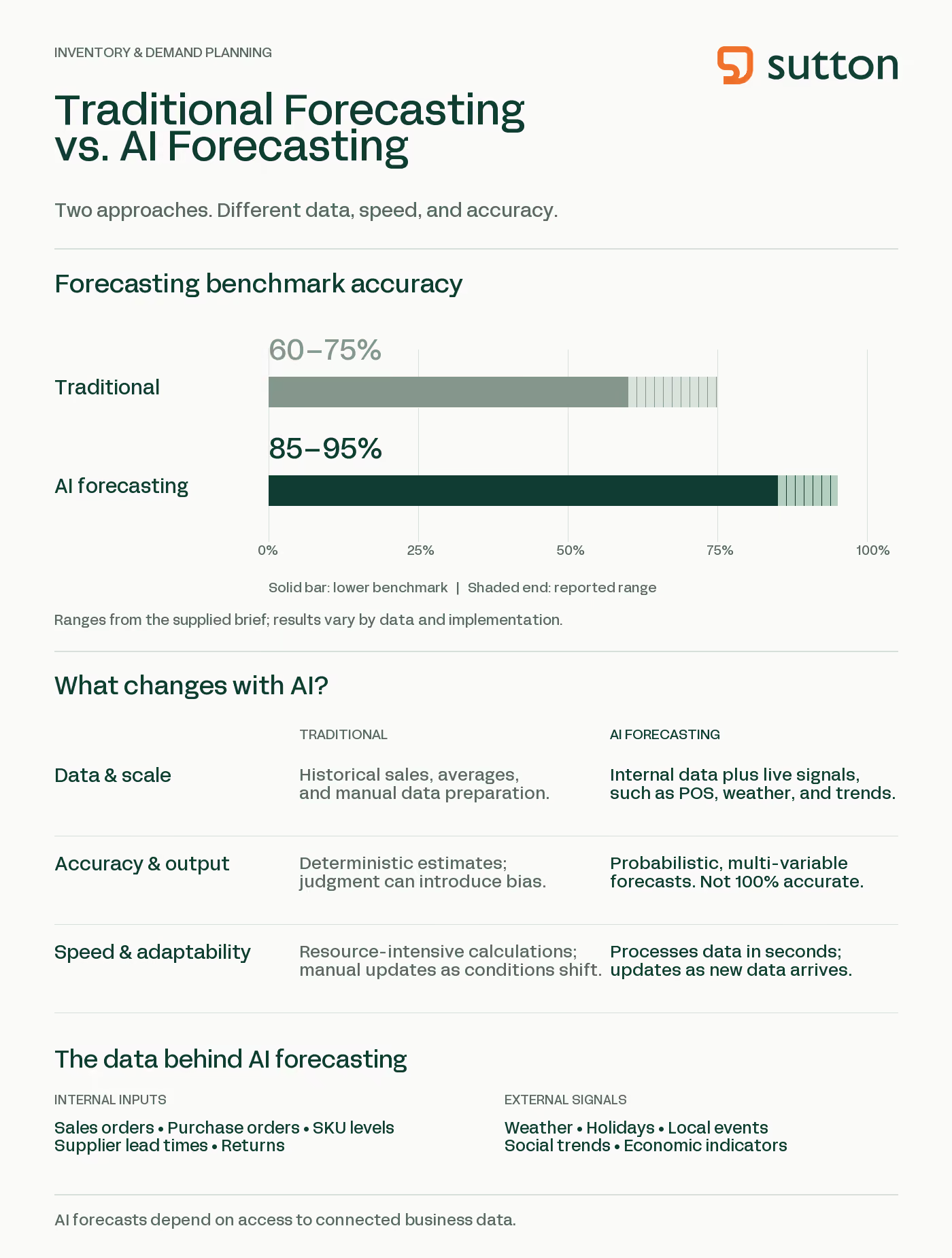
AI inventory forecasting tools can analyze company data and trends (including external factors) in seconds.
Those still relying on traditional forecasting are stuck with static data, meaning that even as they manually run calculations, something changes and the data becomes incorrect. But let’s explore the differences between the two forecasting methods in more detail.
Data and Scale
When someone is manually trying to calculate the demand forecast for inventory, they can only use historical data of past sales and have to make assumptions on everything else and base everything on averages.
And one thing we left out is that before that work can start, someone needs to either clean up the data or be experienced with correctly reading the data. Compare this to AI inventory forecasting, which can analyze unstructured, raw data in seconds, while monitoring real-time sales and even data points from other sources that might influence demand trends, such as:
- POS feeds
- Social media sentiment
- Weather patterns
- Competitor pricing
Accuracy and Output
As much as we have been championing AI inventory forecasting in this article, it’s still not a perfect solution and doesn’t achieve 100% accuracy — but it’s a lot closer than the manual method.
In traditional inventory forecasting, estimates are deterministic, and most businesses benchmark accuracy at 60% to 75%. This means that if something is miscalculated or something unforeseen occurs, it’s still considered a good job if the forecast was off by 40%. For a business moving a high volume of products with small profit margins, this unreliable supply chain could be disastrous.
AI inventory forecasting, by contrast, uses more probabilistic determinations, meaning an AI tool in your forecasting process can raise that benchmark from 60%-75% to 85%-95% accuracy.
Its high accuracy isn’t just because it can analyze and review several data points at once. Another thing AI can do that humans struggle with is analyzing data objectively. Humans tend to be unconsciously biased, so when we are reviewing data, we tend to be overly optimistic or pessimistic if a previous period was good or bad for the business.
Speed and Adaptability
Traditional inventory forecasting and planning takes a lot of resources to do manually, and if the business is experiencing any sort of disruption, this ends up delaying the forecasting process.
For example, let’s look at COVID-19 — all forecasting models built before the pandemic suddenly became obsolete, and analysts needed several months to create forecasts in response to this new reality. However, and this is just an assumption, if AI had been released prior to the pandemic, AI would have been able to analyze information in real time and consider the unfolding factors there and then and keep demand forecasts accurate.
Now that you understand the differences between using AI for inventory forecasting and keeping things traditional and doing it manually, you probably get why it’s time to start considering introducing AI into your demand planning.
How AI for Inventory Forecasting Works
Before you learn how to use it, you need to understand how AI can improve your inventory forecasting.
AI can accurately predict inventory demand only if it has access to multiple data points to analyze patterns, make suggestions, and take action, either ordering more or stopping orders based on what it reads. This is what you’ll need if you want your AI demand forecasting and inventory management done correctly.
The Data AI Forecasting Relies On
AI inventory forecasting tools can analyze and even perform actions by reading data such as:
- Open sales orders and order history
- Open purchase orders
- SKU levels
- Supplier lead times
- Returns
You can also take it a step further and have your AI tools analyze external data sources, and it doesn’t have to be anything macro like country GDP or production levels to see if anything is threatening the supply chain. You can monitor anything with the potential to disrupt your business, including:
- Weather forecasts
- Upcoming holidays
- Local events
- Social media trends
- Economic indicators
More importantly, you need to ensure the AI can access your business's internal data to monitor sales, which will likely mean integrating it with your current manufacturing ERP software or POS systems.
Pattern Recognition and Multi-Variable Analysis
Depending on the type of AI tool you go with (since all of them perform slightly differently), there are some tools that use gradient boosting and sequential deep learning to find patterns in your data from several source points that would otherwise be difficult to find manually.
This is important because there are a bunch of factors that can distort the data and lead to someone making an incorrect forecast, as different things will change how fast or slow a product is moving, including:
- Promotions
- Pricing changes
- Channel migration
Continuous Learning and Real-Time Adjustment
Another thing that is difficult to anticipate when forecasting demand is understanding location-specific requirements — like businesses that manage multiple warehouses for their Shopify products.
Sticking with the example of a business that is selling via ecommerce platforms, AI inventory forecasting for Shopify means you need to figure out demand for every:
- Store
- Region
- Other sales channels
AI inventory forecasting models update automatically as new sales orders, traffic, or supply chain data come in.
Normally, a business would analyze its safety stock levels and set reorder points to avoid stockouts. But with AI, you can allow the software to determine the best point to order more inventory because it is perpetually analyzing data and your business — setting you up with dynamic thresholds for holding inventory at each location.
So, that’s how to use AI for inventory forecasting in your workflows, mostly by ensuring it has access to your business's data. Here are the benefits you can experience once you get these integrations up and running.
The Benefits of Using AI Inventory Forecasting
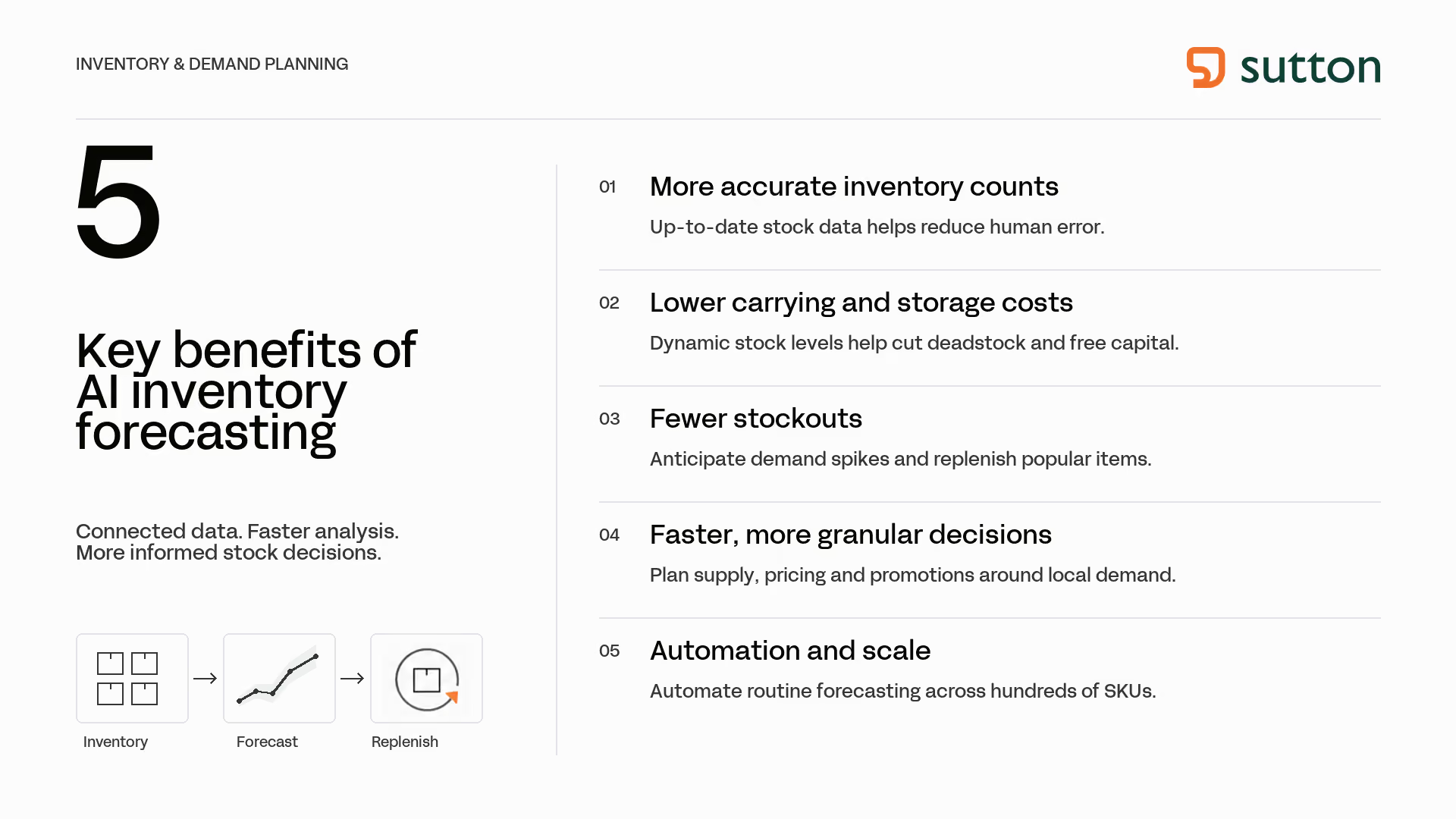
The biggest benefit of using AI in your workflows is the speed at which it can analyze massive amounts of internal and external data to help you improve not just your demand forecasts, but your entire supply chain.
But let’s look into them in more detail.
More Accurate Inventory Counts
To err is to be human, and from carelessness or reading incorrect data, human error leads to all sorts of problems, such as:
- Overstocking
- Understocking
- Discrepancies in data-keeping
AI reduces these simple errors by continuously reading up-to-date information, and depending on how you set it up, you can even automate inventory counts using RFID tags and sensors. As inventory moves through your supply chain, your software automatically logs its movements, and AI can detect them in real time.
Lower Carrying and Storage Costs
As we already explained earlier in the article, with AI-driven inventory forecasting for warehouses, you can make your safety stock and reorder point levels dynamic, meaning you don’t have to manually check and recalculate your points at regular intervals.
Having a dynamic system in place helps you:
- Reduce carrying costs
- Eliminate deadstock
- Free up capital
Depending on the type of AI tool you implement into your business, you can use agentic AI, which can place purchase orders for you and even negotiate better supplier terms.
Fewer Stockouts
AI anticipates spikes in demand so popular items stay on shelves and customer satisfaction is protected.
Precise forecasts help companies avoid both stockouts and overstocking. Optimized inventory levels, happier customers, and fewer errors can also lead to increased revenue.
Faster, More Granular Decisions
Traditional decision support tools offer a high-level analysis of inventory.
AI forecasting shows which regions, or even which cities, will likely see demand spikes. A manager can ramp up supply ahead of local demand or in response to an emerging trend, and the same insights support better pricing and promotions.
Automation and Scale
Purchase orders trigger automatically when conditions shift, which reduces manual planning effort.
Routine forecasting across hundreds or thousands of SKUs runs automatically, freeing planners to focus on strategic decisions. As forecasting needs and data sources grow, AI handles the added scale and complexity without increasing staff levels.
How to Get Started with AI Inventory Forecasting
Getting started with AI inventory forecasting involves connecting your historical data to machine learning models that predict future stock needs and automate reorders.
Step 1: Gather and Clean Your Data
Pull at least 12 months of sales records, stock levels, return rates, and supplier lead times.
Bring your Point of Sale (POS), Enterprise Resource Planning (ERP), and Warehouse Management System (WMS) data into one platform or format, such as clean CSVs. Then add external factors, including seasonality, promotional calendars, and supplier delivery windows.
Sales history shows seasonal highs, low-demand slumps, and recurring spikes.
A retailer might see footwear sales peak during back-to-school months, while an electronics company sees surges around major holidays. Lead times matter just as much because even a two-day supplier delay can cause downstream stockouts if demand surges, so record average lead times and the variation across suppliers. Seasonal context such as Valentine's Day for florists or monsoon season for umbrella manufacturers keeps the model from misreading a demand spike as an anomaly. Supplier performance history lets the model weigh supply-side reliability when it recommends reorder points.
Step 2: Choose the Right AI Tool
Inventory systems with built-in AI forecasting keep everything in one place.
Chatbots or agentic supply chain tools let you ask natural-language questions about your stock. Custom or no-code app builders let you create tailored tracking workflows.
Step 3: Establish Baselines and Train the Model
Let the AI analyze past sales velocity, turnover rates, and dead stock to build a baseline demand plan covering 3 to 12 months.
Group your SKUs by how they sell, separating steady demand from erratic or highly seasonal items, so the AI applies a suitable forecasting method to each group.
Training also draws on past promotions, stockouts, and order patterns to find recurring cycles, such as demand that spikes the week before a major holiday or dips after a fiscal quarter ends. External signals such as inflation, competitor pricing, new product launches, and unexpected weather events make predictions more resilient in volatile markets.
Every new sales order, delayed shipment, and promotion becomes another data point, so a sudden surge from a viral social media trend gets absorbed into the forecast quickly.
Step 4: Automate Replenishment and Alerts
Program the system to calculate dynamic safety stock and to recommend purchase orders when stock dips.
Real-time dashboards show which products are moving quickly, which are slowing, and where supply chain risks are building. They also flag exceptions such as potential stockouts or slow-moving summer inventory crossing into winter.
Supplier delays, transportation breakdowns, and sudden demand shifts are detected instantly, and their ripple effects on stock levels and customer commitments are highlighted. Teams can then reroute stock, revise purchase orders, or notify customers about possible delays before a disruption escalates.
Step 5: Monitor and Fine-Tune
Compare AI predictions against actual sales using a metric such as Mean Absolute Percentage Error.
Keep human oversight active during major market shifts, unexpected supplier delays, and uncharacteristic local trends.
Getting Started with Sutton
Sutton is an operations platform that helps businesses centralize:
- Inventory
- Orders
- Production
It keeps stock levels, warehouse locations, and order data organized and visible in real time.
AI inventory forecasting works when an AI assistant connects to Sutton through MCP Connectors.
The connection lets the AI read live data such as inventory levels, purchase orders, sales orders, and item catalogs. With that data, the AI can analyze current stock and order trends and answer questions about inventory and priorities. It can also help plan purchasing or production decisions and generate summaries or recommendations based on live Sutton data.
The AI assistant works alongside Sutton by reading and interacting with your data to support planning and decision-making. You can also connect Sutton to other tools through integrations and APIs, which keep data consistent across systems.
Sounds interesting? Feel free to book a free personalized demo, where one of our AI inventory forecasting experts can take you on a tour based on a typical workday for your business.
.jpg)