


When spreadsheets are breaking, and ERP systems force you to pay for a bunch of features you don’t want, what solution can a manufacturer turn to?
At this point, many turn to MRP system software to help them manage their inventory and run production, without the headaches of bloated ERP solutions or the high price tag. To help you get started with your research to choose the best MRP software for manufacturing, we’ve compiled this list of the six best ones available on the market right now. We wanted to diversify the list with tools that are better suited to specific stages of business growth.
So, whatever stage your business is at, there’s a tool below that can help you manage your materials, production, and demand, without getting in the way of your workflows.
| # | Software | Best for | Key features | Pricing | Rating | Trial / free plan | Tradeoffs |
|---|---|---|---|---|---|---|---|
| 1 | Sutton | Small to midsize manufacturers that want affordable, easy-to-use planning, purchasing, production, and fulfillment in one system. |
|
From $320/month | Live demo | Easy to use, with fast implementation and hands-on onboarding. Some advanced manufacturing features are still in development. | |
| 2 | Fishbowl | Small to midsize manufacturers that need on-premise or cloud flexibility, especially teams using QuickBooks or Xero. |
|
From $349/monthFor two users | Yes | Broad features and strong onboarding. Reporting is dated, production scheduling can be rigid, and costs rise with users and modules. | |
| 3 | NetSuite | Larger manufacturers that need ERP-level control across multiple locations, entities, and markets. |
|
Contact vendorTypically $999+/month Implementation: $50,000–$250,000+ |
No | Powerful and scalable, but expensive and complex. Implementation takes time and requires paid consultants. | |
| 4 | Katana Cloud Inventory | Ecommerce and DTC brands that make and sell their own inventory, particularly at lower order volumes. |
|
From $299/monthCore plan; manufacturing management adds $199/month | Free planLimited to 30 SKUs | Strong interface, integrations, and support. Add-ons, mandatory onboarding costs, and usage-based pricing can make it expensive as volume grows. | |
| 5 | Odoo | Budget-conscious or technical teams that want a modular, open-source system and can handle more setup. |
|
Free Community planPaid plans from about $31/user/month | Free planCommunity edition | Flexible and customizable, but setup is technical. Users report bugs, upgrade challenges, and uneven support; costs grow with apps, users, and hosting. | |
| 6 | inFlow | Small manufacturers and distributors that want quick, no-frills setup and tools that are easy to learn. |
|
From $186/month | Yes | Easy to learn, with responsive support. Mobile functionality and reporting are limited; order overages can be costly, and some users report accounting sync issues. |
1. Sutton
Sutton is the best MRP software for manufacturers due to its affordability and ease of use.

Rating: 4.9/5
Pricing: Starts at $320/month
Sutton, a cloud-based system, is one of the newest MRPs on this list but is already proving itself in the manufacturing industry.
Sutton gives you everything you need to optimize and manage your materials planning, purchasing, production, and fulfillment operations, so you can manage your entire supply chain from a single screen.
If your business's growth has been locked behind the cells of a spreadsheet, then Sutton is a significant upgrade, helping you unify all your important business information so it’s accessible to your shop floor operators and manufacturing managers, allowing both to see the progress of tasks and know exactly what needs to be done next to fulfill an order.
Sutton's Core Features
Sutton takes the number 1 spot on this list of best MRP software for manufacturing, as it not only gives you the tools you need to manage your inventory and production, but it also helps you with:
- Inventory Management — See exactly where every item is in your business in real time. Also, if you work in the food and beverage or electronics industry, you can track batches, lots, and serial numbers for a detailed overview of where all your inventory went after it leaves your warehouse or for warranty tracking.
- Procurement Management — Create and receive purchase orders, in full or in part. And if supplies arrive but weren’t recorded in the system, you can create a PO retroactively so everything is properly documented.
- Manufacturing and MRP — Create and maintain your bill of materials, either at a single-level or multi-level if you handle subassemblies, so you can guarantee consistent product builds, as BOMs also help automate production scheduling.
Pros
- Easy to use with fast implementation and hands-on onboarding
- Unify your inventory, warehouse, and production processes and teams
- Real-time inventory with barcode scanning, with quick inventory counts
- Native integrations, as well as access to an open API to create your own integrations
Cons
- It’s a relatively young MRP software, and some advanced manufacturing features are still in development
Is Sutton Right for You?
Due to its affordability and how quickly you can get it up and running within your business, we would recommend Sutton if you’re looking for real-time visibility into your entire business. You can book a live demo to see it in action before making a commitment. Book a demo here.
2. Fishbowl
Best for small manufacturers needing on-prem or cloud flexibility
Rating: 4.5/5
Pricing: Starts at $49/user/month
Rating: 4/5
Pricing: Starts at $349/month for two users
Free trial: Yes
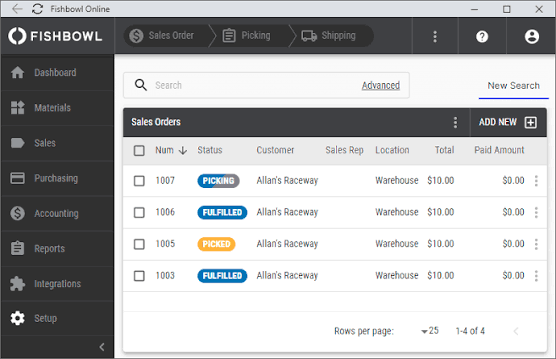
Fishbowl is one of the more established names on this list, founded in 2001 and designed for small- to midsize manufacturers who need inventory, warehouse, and manufacturing management in a single system. It can be deployed on-premise or in the cloud.
Pros
- Broad accounting and ecommerce integrations
- Broad feature coverage across inventory, manufacturing, and warehouse management
- Strong hands-on onboarding and customer support, especially during implementation
- Flexible deployment, either on-premise or cloud-based
Cons
- Native reporting is limited and dated; some users fall back on spreadsheets
- Rigid system design makes it a poor fit for manufacturers with frequently shifting production schedules
- Costs rise with additional users and modules, and API connectivity is limited
- No built-in way to correct data entry errors after the fact
Is Fishbowl Right for You?
Fishbowl is a solid fit if you're a small to midsize manufacturer already using QuickBooks or Xero and want inventory, manufacturing, and warehouse tools in one system without a full ERP budget. It's less suited to businesses with highly variable or seasonal production schedules.
3. NetSuite
We’ve allowed one ERP system into the list because this is likely a better solution if you’re a large enterprise.

Rating: 4.2/5
Pricing: Contact vendor (typically $999+/month; implementation costs range from $50,000 to $250,000+)
Due to limitations of most MRP system software, if you’re a large company, then it’s more cost-effective to opt for an ERP platform like Oracle’s NetSuite.
The reason is that with most solutions, costs increase based on users and orders, so it’ll likely be more cost-effective to opt for NetSuite instead, and centralize your entire business so you can manage everything, such as:
- Financials
- Inventory
- Production
- Supply chain
- Procurement
- Warehouse management
And ultimately, a manufacturing ERP system is always going to be able to do a lot more than an MRP, and is a better choice if you're a big business looking to get a handle on multi-subsidiary structures, multi-currency transactions, and multi-location inventory.
Pros
- Features and tools to manage your entire business, regardless of how complex your workflows are
- Best for mid-market businesses and enterprises, especially if they’re using Oracle products already
- Scales well from mid-market to enterprise without requiring a system change
Cons
- The most expensive in this list, which is pricier depending on how many modules, users, and customizations you need
- Will take a long time to implement and require paid consultants to help with onboarding
- Interface is complex, and many routine tasks involve multiple steps or require admin involvement
Is NetSuite Right for You?
If you’re a larger business with a complicated manufacturing operation, but you need something to centralize your entire business across multiple locations, entities, and markets, then NetSuite could be worth a look. If you’re a smaller manufacturer, then it will likely be too costly and overkill.
4. Katana Cloud Inventory
Best for e-commerce businesses making and selling their own inventory.

Rating: 4.6/5
Pricing: Starts at $299/month (Core plan; manufacturing management add-on $199/month extra)
Katana Cloud Inventory is a bit of a tricky one to define, as it is only a few years older than Sutton and has undergone several facelifts over the years.
We’ve included it in this list of best MRP software for manufacturers because it is indeed a form of MRP, but with a heavier focus on inventory management, with add-ons to extend its functionality. Katana comes with many native integrations, all of which are essential for managing e-commerce stores, and every time a new order comes through one of these channels, inventory is automatically committed to that order. Implementation is very quick, especially compared to other ERP vendors, typically taking around six weeks.
Pros
- Users praise its interface
- You can easily take an omnichannel sales approach with its integrations
- Strong customer support with fast response times
- No per-user fees, and costs center around product usage
Cons
- Pricing is difficult to understand as features are hidden behind add-ons, and some costs, like onboarding, are mandatory. Also, because of the pricing model, it’s going to be expensive at higher order volumes and essentially not viable for some businesses like wholesalers. Finally, most reviewers have pointed out that there have been price increases mid-contract and that features have been moved behind paid add-ons
- Manufacturing features and tools are behind a paid add-on
- BOM functionality is considered below-average when compared to other tools in this list
Is Katana Right for You?
It’s a very good choice if you’re a DTC brand with a heavy focus on e-commerce sales. However, due to the changes to pricing and which features have been moved from the basic package to paid add-ons, it feels like this tool is better suited to businesses with a very specific manufacturing operation (selling online, low volume of orders, size doesn’t matter so much).
5. Odoo
Best open-source option for budget-conscious businesses
Rating: 4.2/5
Pricing: Free Community plan; paid plans start around $31/user/month (typically ~$9.90–$31 depending on plan/region)
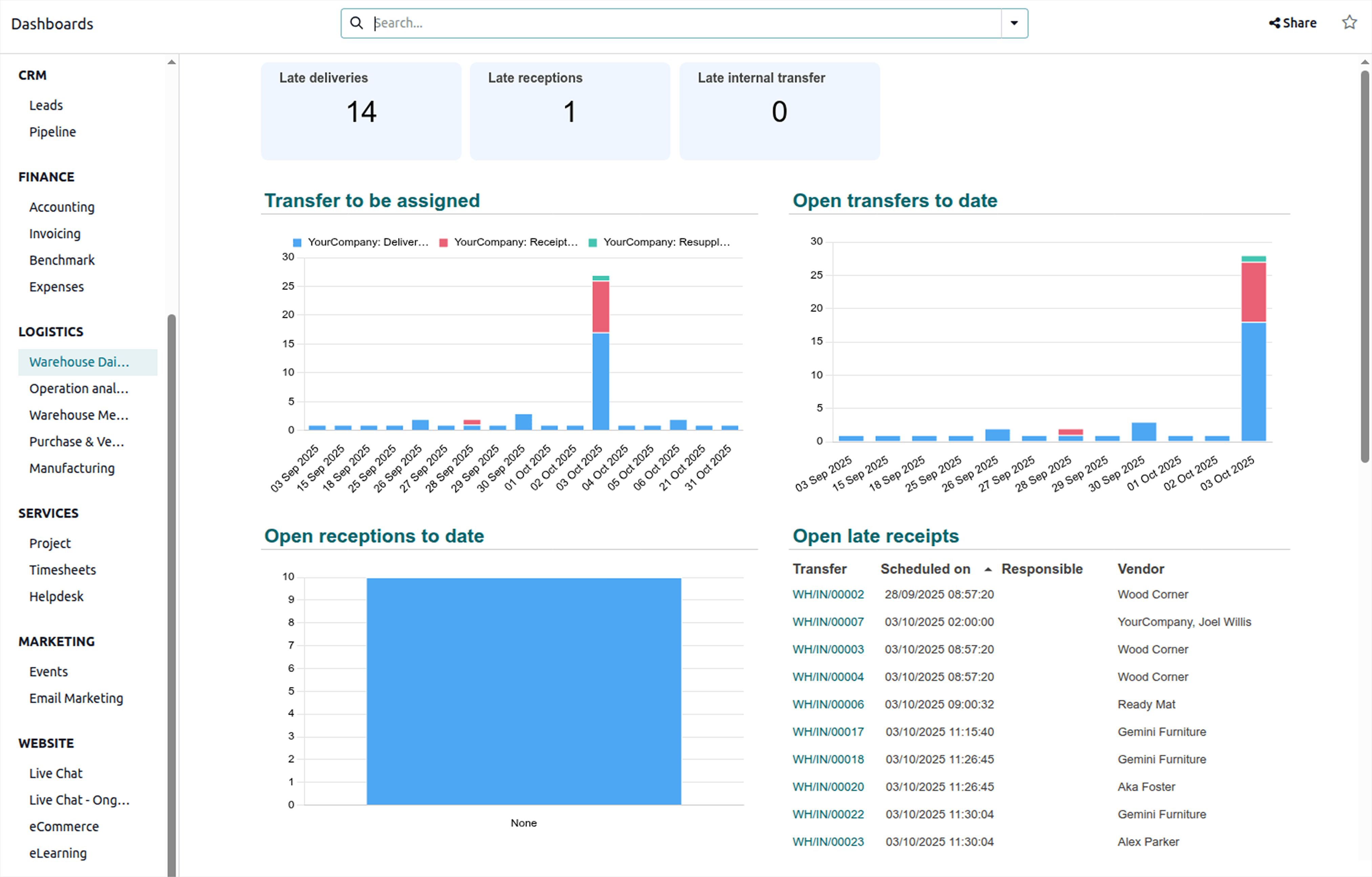
Odoo is a modular, open-source ERP platform that covers nearly every core business function.
Out of all the MRP system software that has appeared on this list so far, Odoo stands out because it is modular, so you only pay for what you need. That means a business can start with a single app for free and slowly expand into a fully integrated ERP as they grow.
Pros
- Very flexible and scales alongside your business
- Free, open-source Community version
- Pay for the features you need, such as inventory, manufacturing, CRM, and accounting
Cons
- A steep learning curve and technical setup that will likely require paying developers or partners to set up
- Frequent bugs and upgrade challenges are reported by users
- Costs can rise quickly as more apps, users, and hosting are added
- Customer support is inconsistent, especially on the lower-tier plans
Is Odoo Right for You?
If you don’t have much budget, or your business is just starting up and you need to keep costs as low as possible, Odoo is a great choice, as you can easily customize it to give you exactly what you need from your software. Once your business starts to scale, you simply add more modules.
6. inFlow
Best for small manufacturers that need no-frills setup
Rating: 4.4/5
Pricing: Starts at $186/month
Free trial: Yes
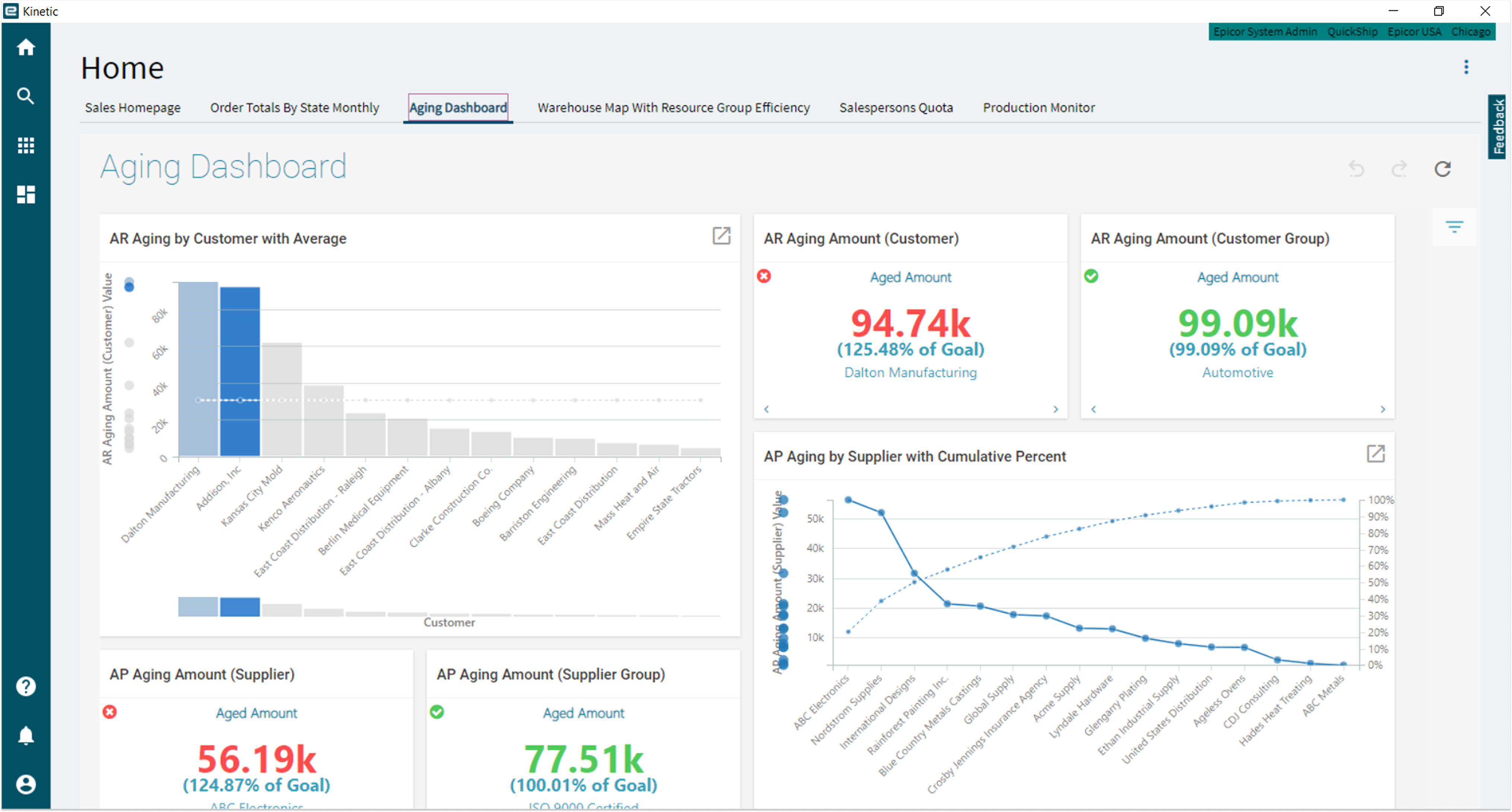
inFlow is a cloud-based inventory and manufacturing system aimed at small and mid-size businesses, used in over 90 countries for wholesale, manufacturing, and ecommerce. It's known for being quick to set up and easy for non-technical teams to learn, with mobile apps that let staff manage stock, orders, and barcode scanning from the field.
Pros
- Intuitive interface that teams pick up quickly with minimal training
- Broad ecommerce integration coverage, connecting to 35+ platforms including Shopify, Amazon, and WooCommerce
- Responsive customer support, frequently highlighted in reviews
- Simple, contract-free monthly or annual pricing
Cons
- Mobile app is reportedly slower and more limited than the desktop version
- Reporting can require exporting to other tools for more specific or combined views
- Sales order limits scale with plan tier, and overages get expensive
- Some users report sync issues with accounting integrations like Xero
Is inFlow Right for You?
inFlow is a strong pick if you're a small manufacturer or distributor that wants to get up and running fast without a steep learning curve. It's less suited to businesses that need deep reporting customization or high sales order volume without paying for a higher tier.
What Features Should MRP Include?
Before comparing vendors, it helps to know the baseline capabilities a legitimate MRP system needs.
Core planning inputs:
- Master Production Schedule (MPS): Defines what end products to build, how many, and when they're due
- Bill of Materials (BOM): Breaks products into multi-level component lists, covering raw materials and sub-assemblies
- Inventory Control: Tracks current stock, materials on order, and supplier lead times
Together, these three are the foundational inputs every MRP calculation depends on.
Operational features that act on those inputs:
- Demand Forecasting: Predicts material needs from historical sales and market trends, helping avoid over- or under-production
- Purchasing and Procurement: Automatically generates purchase orders and reorder suggestions
- Capacity and Production Scheduling: Allocates shop floor work against machine and labor availability, ideally producing a finite schedule so lead times stay accurate
- Exception Reporting: Flags late shipments, broken schedules, or shortages as they happen
What Is the Best Software for MRP?
The best MRP software depends on your company size, budget, and manufacturing style — there's no single universal answer.
Here's how three of the top options compare:
- Sutton: Best overall for small to mid-sized manufacturers that want an affordable, fast-to-implement system unifying inventory, production, and procurement in one place
- Fishbowl: Best for small and mid-market product businesses deeply reliant on QuickBooks or Xero for accounting that need solid inventory tracking and manufacturing order management
- Odoo: Best for budget-conscious or technical teams that want modular, open-source customization across manufacturing, inventory, and sales
For most manufacturers outgrowing spreadsheets, Sutton tends to offer the best balance of price, implementation speed, and day-one usability, but the right choice ultimately depends on your team's size, budget, and the complexity of your production process.
How to Choose the Best MRP Software for Your Business

This article contains just six of the best MRP software for manufacturers, but if any of these don’t sound as though they’re a good fit for you, there are still tons of vendors floating around online to choose from.
When you start investigating and testing solutions, whether from this list or found elsewhere, we’d like to give you a quick checklist you can follow to help you determine which is the best solution for you:
- Implementation time — How long can you afford to have potential downtime as you move over to the new software? Can you do a full rollout, or will it need to be iterative?
- Ease of use — Are your operators tech-savvy, or will they need hands-on training to get set up with new software?
- Pricing transparency — As pointed out in this list, some costs are hidden, and historical price changes have been unpredictable. What is your budget, and have you analyzed all the implementation costs?
- Core MRP functionality — Does it cover the basic MRP functionalities, or are features like BOMs, production scheduling, inventory, and procurement hidden behind paid add-ons?
- Implementation and customer support — Is implementation handled via self-onboarding, or is help available for post-implementation check-ins?
- Integrations — Will you be able to integrate the software into your current tech stack?
And with that said, there you have it! The best MRP software for manufacturing is available today, and some questions to ask yourself when choosing software for your business.
If you already want to start testing solutions, we recommend trying Sutton — an affordable, easy-to-implement MRP software that gives you and your team an end-to-end view of your operations from any device with an internet connection. , Book a demo, and we'll walk through one of the methods from this article live in Sutton.