




Odoo is one of the more appealing ERPs available right now. It’s open source, modular, covers an entire company’s software and has a low entry cost that includes all apps. This might be ideal for a business just starting.
But what happens when you’re a growing company, yet you always have to keep up with migrating your customizations? What happens when the cheap license turns into a hidden cost just to be able to re-port everything once a new version comes out?
This guide compares five Odoo alternatives for manufacturers, providing them with criteria on where Odoo does well, where its limits are, and what each option actually costs over three years.
Why Manufacturers Look for Odoo Alternatives
Odoo earns its place among the most popular ERPs. The Community edition is free, the app store and partner community are huge, and its capabilities cover almost every department while maintaining a low entry price.
Manufacturers, however, start looking at Odoo competitors for one of these reasons:
Complexity: Odoo is a great option for a growing company that wants to leave the spreadsheets behind. However, when the business starts running more complex operations, its needs change: formulas have to scale by yield, inventory must be visible at all times and lots need to be traced fast for audits. Odoo covers the basics, but going more in depth often requires custom modules.
Upgrades: Odoo releases a new version annually, and with each upgrade, every custom module has to be migrated, tested and redeployed. Odoo takes care of the standard modules, but the complex, customized ones need to be handled by a partner or developer, and the yearly migration can become costly and time-consuming.
Cost: Odoo’s Standard plan is very affordable and represents a great start for growing businesses. However, as companies develop more complex needs, they need to move their users to the Custom plan (at approximately double the price) to gain access to customizations. In addition, they’ll have to hire partners or developers to migrate those customizations with every yearly upgrade, so the cost for deeper manufacturing features becomes a few times higher than what was paid in the beginning.
With all this in mind, Odoo is still a strong option for businesses with standard production and access to a partner or developer.
Where Odoo Hits Its Ceiling for Manufacturers
Odoo’s manufacturing limitations don’t come from a lack of capabilities, but from the discrepancy between the standard offer and the needs of a growing business with complex operations.
- Editions: Manufacturing is in both editions, but Quality, PLM and Shopfloor are Enterprise-only. For custom code, you need to subscribe to the Custom plan and host on Odoo.sh or on-premise, since Odoo Online won’t run your own modules.
- BOMs: BOMs are defined for a set batch size. Operators can record different actuals, but scaling a formula by yield, potency or catch weight usually means custom work.
- Planning: Replenishment is driven by reordering rules. Getting the plan to reflect real availability and lead times across warehouses often takes tuning or extra modules.
- Customizations: Every custom module a partner builds has to be migrated, tested and redeployed when the next version is released.
5 Things to Look For in an Odoo Alternative
Choosing the right platform for your business’s needs can be quite a challenge, but before making a decision, it’s worth taking these criteria into account:
1. Manufacturing depth
Check which plan includes BOMs, MRP, traceability and quality, and whether they’re native or partner-built. A low entry price means little if what you need sits two tiers up.
2. Planning
Classic MRP supposes that material and capacity will be there when needed. A material-constrained plan, on the other hand, takes into account what’s on hand, committed and on order, so the floor can run the schedule you release.
3. Upgrades
The more customizations you need to support, the more dependent you become on a partner or developer in the long run. All customizations need to be migrated with every upgrade, and it can become costly. It’s worth finding options where changes remain compatible with the system updates.
4. Process fit
Depending on your type of business, you might need lot and batch tracking, expiry dates and BOMs that cover yield and scrap. Ask to see a recall trace in the demo.
5. Time to live
Before choosing an ERP, consider what six months of workshops with a partner, a developer and your ops lead would cost. Ask how long go-live takes and who needs to be involved.
The Best Odoo Alternatives for Manufacturers in 2026
1. Sutton
Best for Businesses That Need Depth Without Custom Builds
Rating: 4.9/5
Pricing: Sutton has transparent, published plans for you to look at. Pricing is also set by the users and modules a team needs, not by volume or revenue, and setup, integrations, customization and support are included. Nothing new gets unexpectedly added after go-live, unlike legacy ERPs with per-transaction and per-connector charges. Terms are in writing, and a proof of concept comes before signing.
Implementation: 2 to 8 weeks, onboarding included
Sutton connects multi-level BOMs, lot traceability from supplier to shipment and warehouse management into one AI-based manufacturing ERP that’s live in weeks, not months.
Unlike Odoo, which gives you a broad suite and leaves manufacturing depth to configuration and custom modules, Sutton natively brings production, inventory and purchasing together, so the office and shop floor work from the same live data. In addition, Sutton Studio lets you build custom apps, dashboards and trackers inside the platform for when you need something specific.
Sutton is a strong alternative mainly because of its powerful capabilities combined with the ease of implementation: 2 to 8 weeks and you’ll be live, without any external consultants needed.
Key features:
- Multi-level BOMs with versioning that support your production runs
- Demand-driven MRP that tells you what to buy, what to build and when
- Lot and batch traceability from supplier to shipment, including nested items
- Bin-level, multi-warehouse inventory updated by barcode or QR scan
- POs tied to vendors and SKUs, with full, partial and retroactive receiving
Pros:
- Purpose-built for manufacturing and distribution, with no module unlocks for core features
- Live in 2 to 8 weeks with onboarding included and no implementation partner required
- Shop floor control that shows what’s running, what’s late and what’s next
- Native integrations with QuickBooks, Xero, NetSuite, Shopify and Amazon, plus an open API
Cons:
- Not suited for very large enterprises or companies looking for heavy accounting, HR, or CRM modules natively
- Some advanced manufacturing features are still in development
- System-wide updates rather than per-customer release cycles
Best for: Growing and mid-market manufacturers and distributors that have outgrown Odoo’s standard manufacturing flows, especially food and beverage, chemical and cosmetics producers with traceability requirements.
2. NetSuite

Best for Multi-Entity Companies Needing a Full Cloud ERP
Rating: 4.1/5
Pricing: Contact vendor (base license from around $999/month, plus users and manufacturing modules)
Implementation: 6 to 12 months
One of the most widely used cloud ERPs in the mid-market, Oracle NetSuite covers deep financials, multi-subsidiary consolidation and global tax handling. Manufacturing runs on work orders and assemblies, with WIP, routings and Advanced Manufacturing sold as add-ons. It’s a clear step up from Odoo in breadth and in cost (see our NetSuite alternatives guide).
Key features:
- Multi-entity financials and consolidation
- Work orders, assemblies and MRP
- Advanced Manufacturing add-on with WIP, routings and scheduling
- Lot and serial tracking with SuiteAnalytics reporting
Pros:
- Strongest financials and multi-subsidiary support on this list
- Scales from one site to global operations
- Large partner and SuiteApp ecosystem
Cons:
- Manufacturing depth sits in add-on modules with their own cost
- Needs a certified partner and months of workshops to implement
Best for: Finance-led companies with multiple entities or international operations that need consolidated reporting more than shop floor depth.
3. Microsoft Dynamics 365 Business Central
Best for Manufacturers Running on Microsoft
Rating: 4.3/5
Pricing: $110/user/month for Premium, which manufacturing requires
Implementation: 3 to 9 months
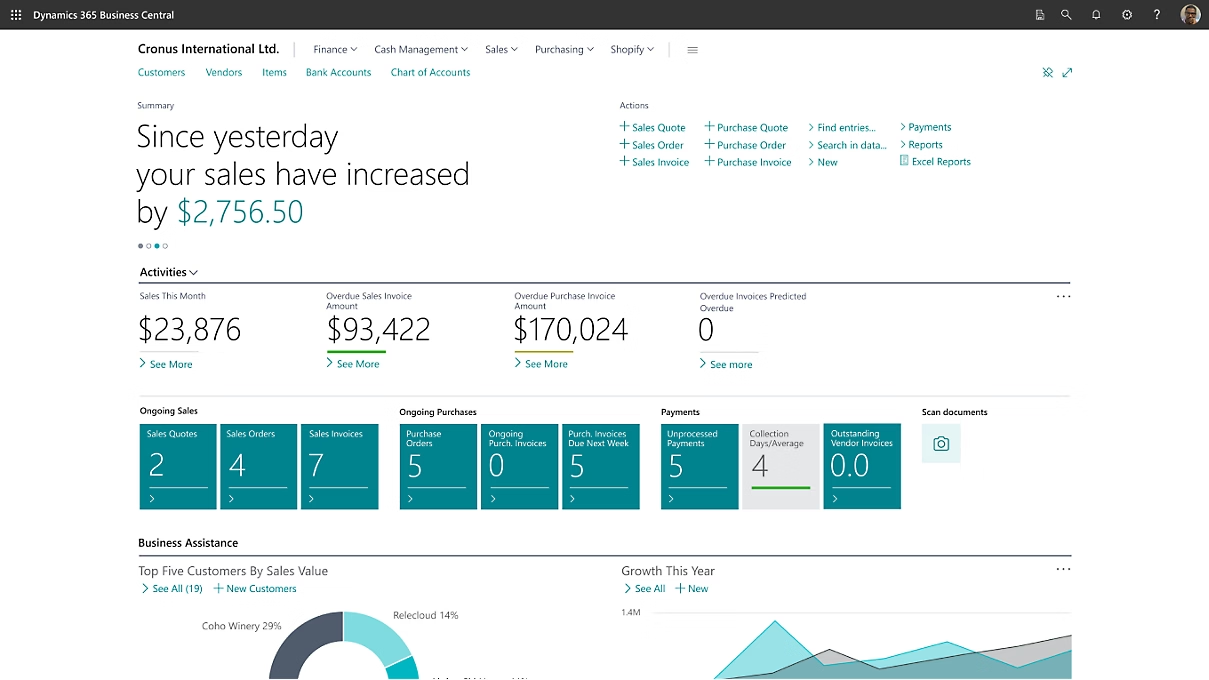
Business Central is Microsoft’s ERP for growing and mid-sized companies, closely tied to Outlook, Excel, Teams and Power BI. Manufacturing only comes with the Premium license, and once a company uses it, every full user needs Premium. Partners extend it with apps from Microsoft AppSource.
Key features:
- Production BOMs, routings and production orders
- MRP and capacity planning with finite loading
- Lot, serial and expiry tracking
- Native Microsoft 365 and Power BI integration
Pros:
- Familiar interface for teams already in Microsoft 365
- Customizations built as extensions that survive updates
- Large partner network and AppSource marketplace
Cons:
- Process manufacturing and advanced quality usually need third-party add-ons
- Partner-led implementation adds cost and time
Best for: Manufacturers already using Microsoft 365 who want solid financials and are comfortable working through a Microsoft partner.
4. ERPNext
Best Open-Source Option for Technical Teams
Rating: 4.2/5
Pricing: Free and open source; Frappe Cloud hosting from $5/site/month
Implementation: 1 to 3 months for standard setups, longer with custom apps
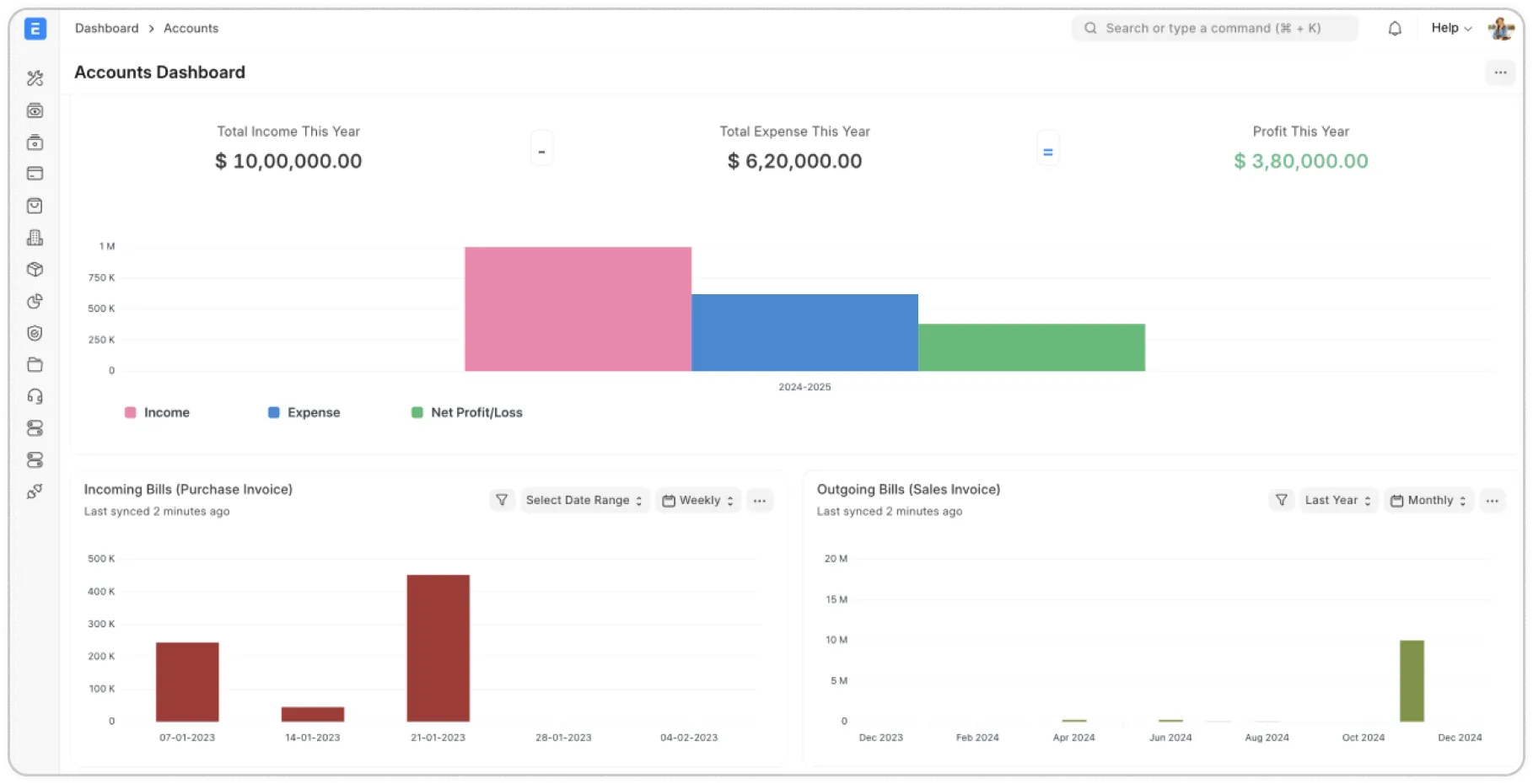
ERPNext is the most similar to Odoo Community: open source, broad and built on its own framework, Frappe. Every module, including manufacturing and quality, is free with no edition gating, and hosting is priced per site, not per user.
Key features:
- BOMs, work orders and production planning
- Batch and serial tracking with expiry dates
- Process loss and scrap items on BOMs
- Quality inspections and workstation capacity
Pros:
- No license fees and no paid tier holding features back
- Per-site hosting keeps costs flat as headcount grows
- Fully customizable with Python and the Frappe framework
Cons:
- Needs in-house or partner technical skills to configure and maintain
- Custom apps must be updated through each annual release
Best for: Manufacturers with an in-house developer or trusted Frappe partner who want full control and no per-user licensing.
5. Katana
Best for Small E-commerce Manufacturers
Rating: 4.4/5
Pricing: Free plan (up to 30 SKUs); Advantage plan quote-based
Implementation: Days to a few weeks
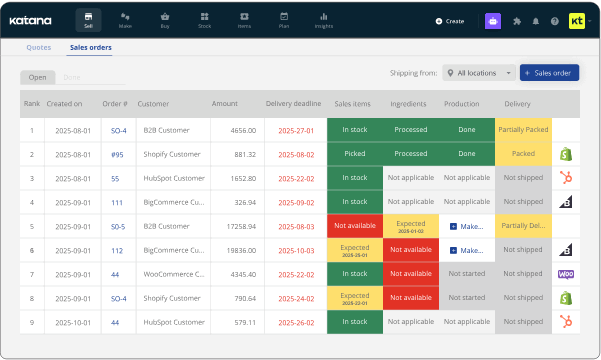
Katana is a cloud MRP for manufacturers that manage physical product inventory and sell through Shopify and other e-commerce channels. It’s quick to set up and offers features like BOMs and production tracking. It doesn’t declare itself a full ERP, but it’s a great option for companies with uncomplicated production.
Key features:
- BOM management and production planning
- Batch, lot and expiry tracking
- Shop floor and warehouse apps for operators
- Native Shopify, WooCommerce, QuickBooks and Xero integrations
Pros:
- Quick setup, easy to use
- Clean, modern UI
- Strong e-commerce integrations
Cons:
- Lighter warehouse management, with bin-level tracking as a paid add-on
- Basic reporting for deeper cost and production analysis
Best for: Small, e-commerce-first manufacturers with straightforward production who want to leave spreadsheets behind.
Three-year cost of ownership: Odoo vs. the Alternatives
Odoo’s per-user license is one of the lowest lines in this table. The table below is made for a 25-user manufacturer over three years. Implementation and custom work are typical market ranges, so use them as a starting point for your own quotes.
Should you replace Odoo?
Not necessarily. If you don’t require complex customizations and you keep your production pretty standard, keeping your current setup could be the better call.
It’s worth moving when:
- Your custom modules cost more to maintain than they did to build
- Planners keep a spreadsheet next to Odoo because the plan doesn’t match the floor
- You need a lot trace you can run in minutes, not days, during a recall
- Upgrades become harder to implement, from year to year
If you’ve considered these points and concluded that it’s time for a change, give Sutton a try. It offers multi-level BOMs, demand-driven MRP, lot and batch traceability and bin-level multi-warehouse inventory and purchasing. Plus, you can keep accounting in QuickBooks, Xero or NetSuite. Sutton’s manufacturing depth, combined with the fast implementation (2 to 8 weeks, with onboarding included), helps your business reach higher productivity and efficiency.
FAQs
Is Odoo good for manufacturing?
Yes, Odoo is a good option for your business if you don’t deal with complex formulas, planning or strict traceability. It offers BOMs, work orders, lot tracking and quality checks on the paid plans. If you need to go deeper, though, you will need custom modules and a partner to handle them through each annual upgrade.
What are some software programs similar to Odoo?
Software programs similar to Odoo are Sutton, ERPNext, NetSuite, Microsoft Dynamics 365 Business Central and Katana. If you need manufacturing depth and fast onboarding, go for Sutton, and for an open-source alternative, check ERPNext. For a broader, partner-led ERP, consider NetSuite or Business Central, while small e-commerce companies might want to look at Katana.
What is the real cost of Odoo for a manufacturer?
The real cost of Odoo is usually several times higher than the license fee once implementation, custom modules and upgrades are included. Most businesses need the Custom plan for Studio and custom code, a partner to build the manufacturing gaps, and a budget to migrate those modules every year.
What is the best Odoo alternative for food and beverage manufacturers?
Food and beverage manufacturers that need lot traceability without custom builds should choose Sutton as an Odoo alternative. It tracks lots and batches from supplier to shipment, including nested items, alongside multi-level BOMs, demand-driven MRP and multi-warehouse inventory. Implementation usually takes 2 to 8 weeks and includes onboarding.